AC#F#C#EBD#G# Oud Tuner
AC#F#C#EBD#G# | AD♭G♭D♭EBE♭A♭ Sangiovese (B13 For Oud) - Oud tuning, chords & scales
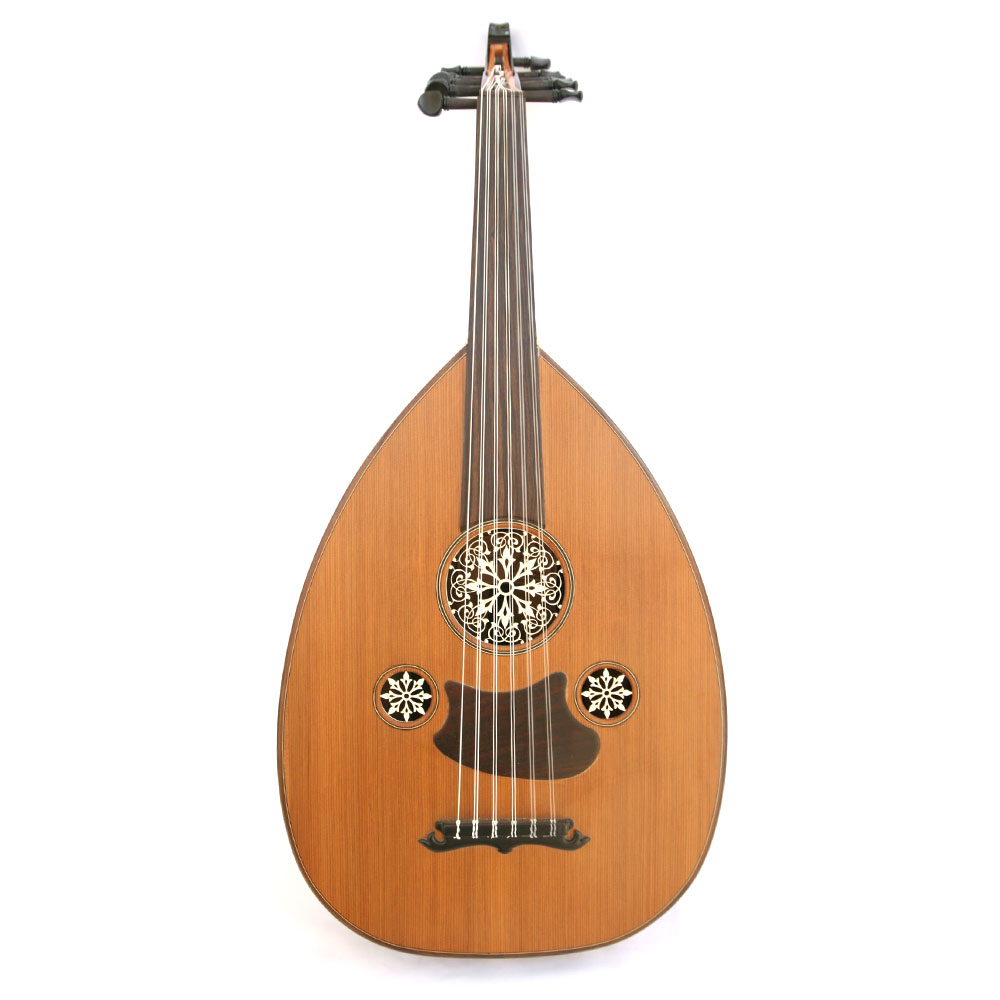
The Sangiovese (B13 for Oud) tuning is a deeply experimental and rich setup for an 8-string Oud, named after the prominent grape varietal, hinting at its complex and full-bodied sonic character. As described by its creator, this tuning serves as a test for an instrument, pushing its boundaries to uncover unique acoustic possibilities. It offers an exceptionally wide dynamic and pitch range, from a profound low A1 to a shimmering high G5#, creating a vast sonic canvas ideal for exploring new melodic and harmonic territories, particularly in modern, fusion, or experimental contexts. The overall upward movement in tension across all strings suggests a bright, resonant, and articulate sound, but also necessitates careful consideration of instrument safety.
Technical Analysis
This 8-string Oud tuning features the following notes, ordered from the lowest-numbered string (String 8) to the highest-numbered string (String 1): A1, C3#, F3#, C4#, E3, B3, D5#, G5#. A key characteristic of this tuning is that the strings are not strictly ordered by ascending pitch numerically; String 4 (E3) is lower in pitch than String 5 (C4#). This non-monotonic arrangement creates unconventional intervals between physically adjacent strings, encouraging a playing style that leverages these wide jumps for arpeggiated figures, contrapuntal lines, or specific chord voicings rather than traditional guitar-like open chords.
- Overall Range: The tuning spans nearly four octaves, from A1 to G5#, providing immense sonic breadth for an Oud.
- Intervallic Structure (from String 8 to String 1):
- String 8 (A1) to String 7 (C3#): A substantial jump of 16 semitones (Major 10th plus a minor 2nd).
- String 7 (C3#) to String 6 (F3#): A Perfect 4th (5 semitones).
- String 6 (F3#) to String 5 (C4#): An Augmented 4th (6 semitones).
- String 5 (C4#) to String 4 (E3): A significant drop of 9 semitones, indicating a non-sequential pitch order between these strings.
- String 4 (E3) to String 3 (B3): A Perfect 5th (7 semitones).
- String 3 (B3) to String 2 (D5#): Another very large leap of 19 semitones (Major 10th plus a Major 6th).
- String 2 (D5#) to String 1 (G5#): A Perfect 4th (5 semitones).
Open Chords and Harmonies
Despite the unusual intervallic jumps between numerically adjacent strings, the open strings of the Sangiovese tuning contain rich harmonic potential. The notes A, C#, E, and G# are all present (A1, C3#, E3, G5#), forming a clear A Major 7 chord. This suggests a foundational harmony around A Major, offering a bright and sophisticated sound when played open or by emphasizing these notes. Additionally, the presence of B3, D5#, and F3# (from String 3, String 2, and String 6 respectively) allows for the construction of a B Major chord. This interplay suggests a harmonic landscape rich in extended jazz-influenced chords and modal possibilities, encouraging complex voicings and arpeggios that fully utilize the wide range and unique string relationships.
How to Tune Your Oud to Sangiovese
To achieve the Sangiovese tuning, all strings need to be tuned upwards from their presumed standard or factory setup. Please follow these instructions carefully:
- String 8 (A1): Tune up 3 semitones.
- String 7 (C3#): Tune up 2 semitones.
- String 6 (F3#): Tune up 2 semitones.
- String 5 (C4#): Tune up 4 semitones.
- String 4 (E3): Tune up 2 semitones.
- String 3 (B3): Tune up 4 semitones.
- String 2 (D5#): Tune up 4 semitones.
- String 1 (G5#): Tune up 4 semitones.
Important String Gauge and Instrument Safety Warning: Please exercise extreme caution when applying this tuning. Several strings in this setup require significant upward adjustment (4 semitones). Tuning a string up by more than 4 semitones from its standard pitch significantly increases string tension, which can put considerable stress on your Oud's bridge, soundboard, and neck. This could potentially lead to string breakage or, in severe cases, structural damage to the instrument. For strings requiring a 4-semitone increase, it is strongly advised to consider using a lighter gauge string to help mitigate excessive tension. If you are unsure about your Oud's capacity to handle this tension, please consult with a professional luthier before proceeding.
String 8: A1 (The lowest pitched string, providing a deep, resonant foundation for the tuning.)
String 7: C3# (A bright, open note adding to the lower-mid range harmony, a significant leap from String 8.)
String 6: F3# (A warm mid-range note, contributing a unique color to the overall harmonic palette.)
String 5: C4# (A clear, articulate mid-high note, creating an unexpected interval with the string below it.)
String 4: E3 (This string is tuned lower than String 5, creating an interesting cross-string voicing and melodic opportunities.)
String 3: B3 (A prominent mid-range note, offering strong harmonic support and melodic presence.)
String 2: D5# (A high, piercing note, adding brilliance and significantly extending the upper register of the instrument.)
String 1: G5# (The highest pitched string, providing a shimmering top end and completing the open string harmonies with a sophisticated touch.)
Loading an obscene
amount of Chords
Loading an obscene
amount of Scales
Loading Tuning Map
Loading Tuning Data
Comments - have your say on AC#F#C#EBD#G#
Capos for AC#F#C#EBD#G#
| Capo | Tuning | Name |
|---|---|---|
| 0 | AC#F#C#EBD#G# | Sangiovese (B13 For Oud) |
Songs tuned to AC#F#C#EBD#G#
Know a song in AC#F#C#EBD#G#?
Please use the below form to submit a song for AC#F#C#EBD#G# that is not already on gtdb.org.
Tuning Map
- Fret
- S8
- S7
- S6
- S5
- S4
- S3
- S2
- S1
- -13
- F
- A#
- D#
- G#
- C#
- F#
- A#
- D#
- -12
- F#
- B
- E
- A
- D
- G
- B
- E
- -11
- G
- C
- F
- A#
- D#
- G#
- C
- F
- -10
- G#
- C#
- F#
- B
- E
- A
- C#
- F#
- -9
- A
- D
- G
- C
- F
- A#
- D
- G
- -8
- A#
- D#
- G#
- C#
- F#
- B
- D#
- G#
- -7
- B
- E
- A
- D
- G
- C
- E
- A
- -6
- C
- F
- A#
- D#
- G#
- C#
- F
- A#
- -5
- C#
- F#
- B
- E
- A
- D
- F#
- B
- -4
- D
- G
- C
- F
- A#
- D#
- G
- C
- -3
- D#
- G#
- C#
- F#
- B
- E
- G#
- C#
- -2
- E
- A
- D
- G
- C
- F
- A
- D
- -1
- F
- A#
- D#
- G#
- C#
- F#
- A#
- D#
- 0
- F#
- B
- E
- A
- D
- G
- B
- E
- 1
- G
- C
- F
- A#
- D#
- G#
- C
- F
- 2
- G#
- C#
- F#
- B
- E
- A
- C#
- F#
- 3
- A
- D
- G
- C
- F
- A#
- D
- G
- 4
- A#
- D#
- G#
- C#
- F#
- B
- D#
- G#
- 5
- B
- E
- A
- D
- G
- C
- E
- A
- 6
- C
- F
- A#
- D#
- G#
- C#
- F
- A#
- 7
- C#
- F#
- B
- E
- A
- D
- F#
- B
- 3
- 2
- 2
- 4
- 2
- 4
- 4
- 4
 © 2026 GTDB