ADAE Violin Tuner
ADAE La Cetra No. 6 - Violin tuning, chords & scales
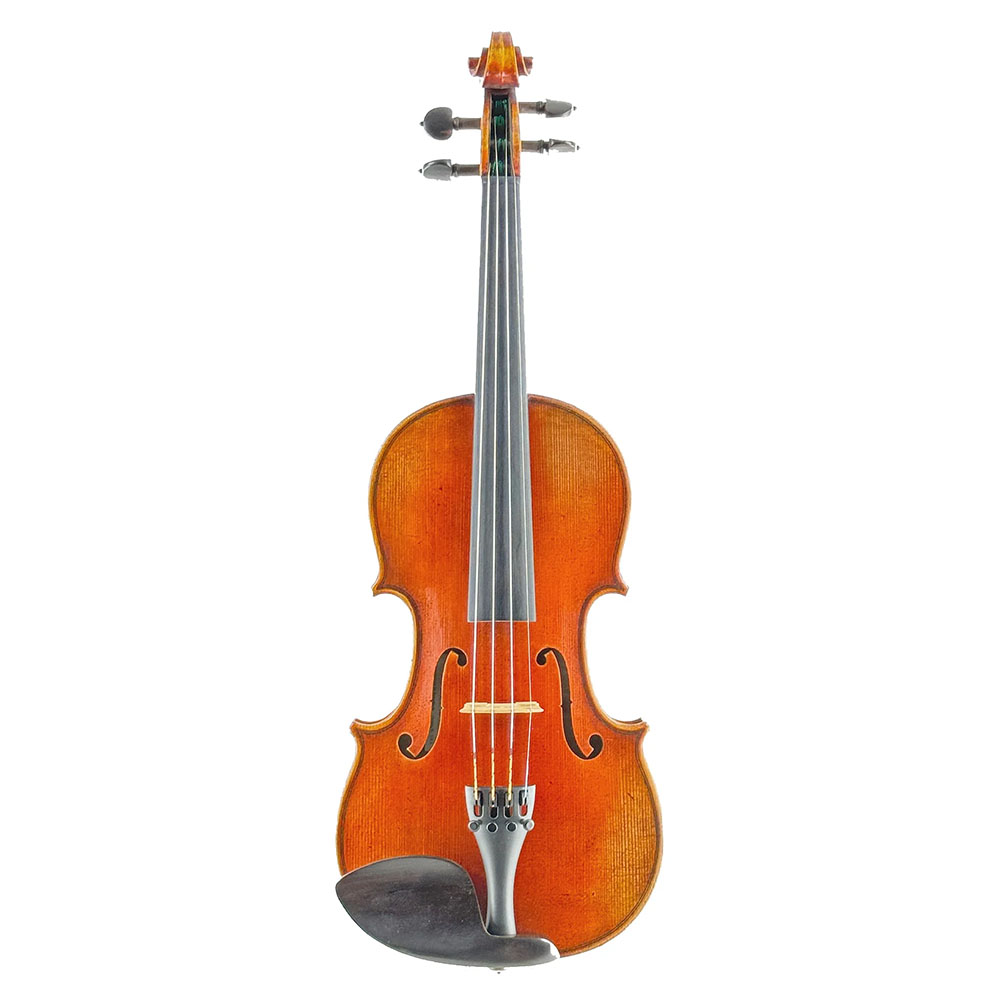
Tuning Analysis: La Cetra no. 6 (Violin Scordatura)
This unique tuning, known as "La Cetra no. 6", is a fascinating example of scordatura – an altered tuning – specifically prescribed by Antonio Vivaldi for his Op. 9 No. 6. While traditionally associated with the violin, its structure offers a deep, resonant soundscape that would be intriguing across various stringed instruments. It moves away from the standard perfect fifths of a violin, introducing a perfect fourth at its lowest interval, creating a rich harmonic foundation.
Verbal Observations
This tuning cultivates a notably low and resonant character. The open strings resonate with a profound depth, offering a melancholic yet full-bodied timbre. The sequence of intervals suggests a modal, almost drone-like quality, particularly with the repeated 'A' notes at different octaves and the presence of 'D' and 'E'. It evokes imagery of classical baroque music, perhaps with a touch of folk influence due to its open, ringing nature. Performers might find it inspires legato phrasing and rich chordal textures, making it ideal for pieces requiring sustained harmonies and a broad tonal palette.
Technical Analysis
The open string notes are configured as A2 – D3 – A3 – E4 (from lowest to highest pitch). Let's break down the intervals:
- String 4 (A2) to String 3 (D3): A Perfect 4th (P4), spanning 5 semitones. This interval is a departure from the traditional violin's G-D perfect fifth.
- String 3 (D3) to String 2 (A3): A Perfect 5th (P5), spanning 7 semitones.
- String 2 (A3) to String 1 (E4): A Perfect 5th (P5), spanning 7 semitones.
The resulting open string pitches (A, D, E) strongly suggest an A minor or A major tonality, with the D providing a strong suspended or dominant quality. Specifically, the open strings can form an A power chord (A-E) with the added D note creating an implied A suspended 4th (Asus4) chord. The low A2 provides a deep bass foundation. The presence of two A notes at different octaves facilitates drone playing and allows for strong root movement. Given these open notes, chords in the keys of A minor/major, D minor/major, and even G major (by fretting a G on the D string) would be readily accessible and resonant.
How to Tune
To achieve the 'La Cetra no. 6' tuning, carefully adjust each string according to the following instructions. Please note the significant drops in pitch for the lower strings.
- String 4 (Lowest String): Tune this string down 5 semitones to reach A2. (Note: A drop of 5 semitones is substantial; a heavier gauge string is advised to maintain optimal tension and tone, and to prevent string breakage if tuning up to a standard pitch later.)
- String 3: Tune this string down 5 semitones to reach D3. (Note: A drop of 5 semitones is substantial; a heavier gauge string is advised for best results.)
- String 2: Tune this string down 2 semitones to reach A3.
- String 1 (Highest String): Keep this string as is; no change (0 semitones) to remain at E4.
String 4 (Lowest String): A2
String 3: D3
String 2: A3
String 1 (Highest String): E4
Loading an obscene
amount of Chords
Loading an obscene
amount of Scales
Loading Tuning Map
Loading Tuning Data
Comments - have your say on ADAE
Capos for ADAE
| Capo | Tuning | Name |
|---|---|---|
| 0 | ADAE | La Cetra No. 6 |
Please use the below form to submit a song for ADAE that is not already on gtdb.org.
Videos for ADAE on














Tuning Map
- Fret
- S4
- S3
- S2
- S1
- -13
- C#
- F#
- A#
- D#
- -12
- D
- G
- B
- E
- -11
- D#
- G#
- C
- F
- -10
- E
- A
- C#
- F#
- -9
- F
- A#
- D
- G
- -8
- F#
- B
- D#
- G#
- -7
- G
- C
- E
- A
- -6
- G#
- C#
- F
- A#
- -5
- A
- D
- F#
- B
- -4
- A#
- D#
- G
- C
- -3
- B
- E
- G#
- C#
- -2
- C
- F
- A
- D
- -1
- C#
- F#
- A#
- D#
- 0
- D
- G
- B
- E
- 1
- D#
- G#
- C
- F
- 2
- E
- A
- C#
- F#
- 3
- F
- A#
- D
- G
- 4
- F#
- B
- D#
- G#
- 5
- G
- C
- E
- A
- 6
- G#
- C#
- F
- A#
- 7
- A
- D
- F#
- B
- -5
- -5
- -2
- 0
 © 2026 GTDB