CGDG Banjo Tuner
CGDG Cgdg - Banjo tuning, chords & scales
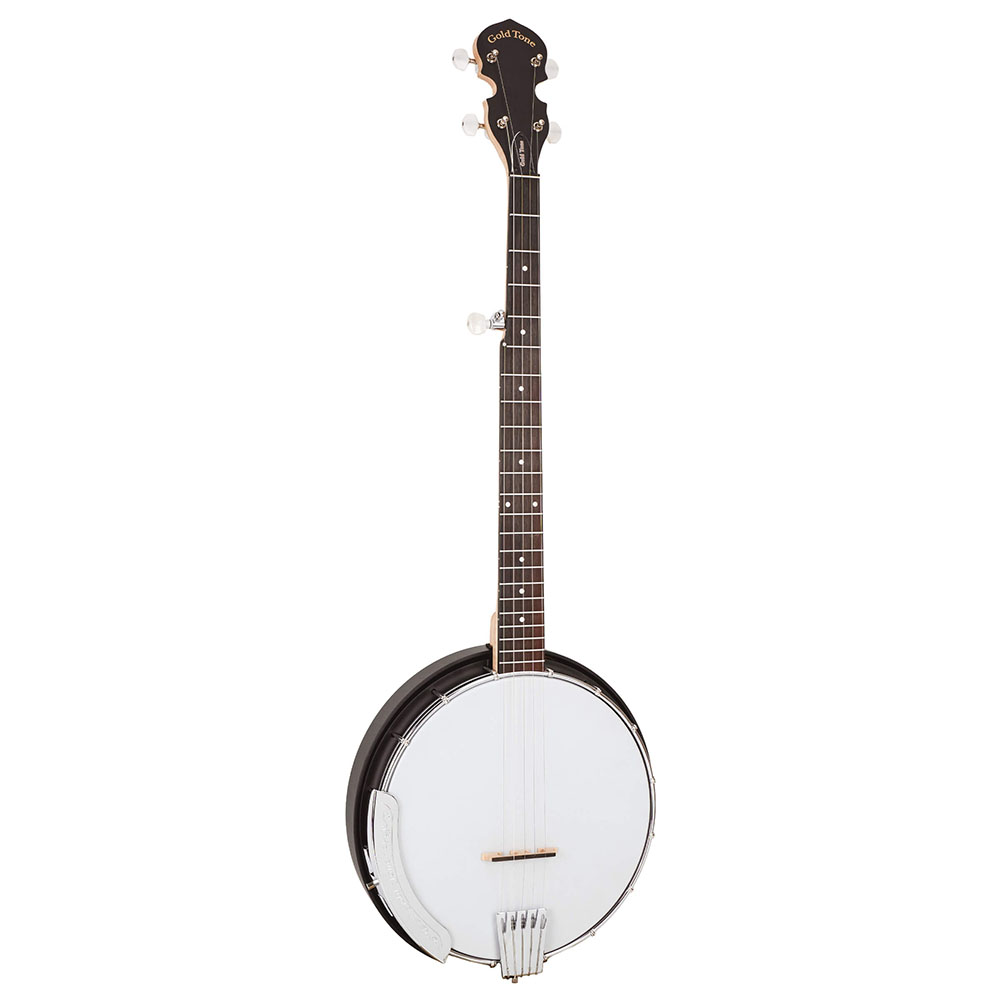
CGDG Banjo Tuning: A Resonant Alternative
The CGDG tuning for the Banjo is an intriguing alternative to more standard tunings like Tenor Banjo CGDA. It offers a unique sonic landscape, leaning heavily into resonant drones and open harmonies, making it a favorite for styles that benefit from a rich, sustained sound and accessible chord voicings.
Verbal Analysis
This tuning cultivates a full, ringing sound, characterized by its open G-D-G sequence on the higher strings. This creates a strong G-major tonality that provides a vibrant drone effect. The lowest C string acts as a deep, foundational root or a dynamic counterpoint, adding depth and complexity to the overall harmony. It's particularly well-suited for traditional folk music, Celtic tunes, and any genre where a rich, open-string texture is desired. The arrangement of notes makes certain chord shapes intuitively available, encouraging fluid melodic lines over sustained harmonies.
Technical Analysis
Here's a breakdown of the tuning's structure:
- Open String Notes (Lowest to Highest): C3, G3, D4, G4
- Intervals Between Strings:
- 4th (C3) to 3rd (G3) string: Perfect 5th
- 3rd (G3) to 2nd (D4) string: Perfect 5th
- 2nd (D4) to 1st (G4) string: Perfect 4th
Open Chord and Harmonic Possibilities:
The open strings C-G-D-G create a rich, suspended harmony. While not a simple major or minor triad, it can be interpreted in several ways:
- The top three strings (G3, D4, G4) form a clear G Power Chord, providing a strong sense of G major.
- Including the lowest C, the overall harmony resonates as a Gsus2 (G-D-C) with an emphasis on the low C, or a C Major chord with an added 9th (D) but omitting the 3rd (E).
Accessible Chord Voicings:
The tuning facilitates several common chords:
- G Major/Power Chord: The open G-D-G on the top strings is inherently a G power chord. Fretting the 4th string (C) at the 2nd fret (to D) creates an open D-G-D-G, which is a complete G Major chord (D, G are the 5th and root respectively).
- C Major: An easily reachable C Major chord can be achieved by fretting the 2nd string (D) at the 2nd fret (to E). This results in C-G-E-G (C, G, E being the root, fifth, and third of C Major).
- Drone Capabilities: The repeating G notes on the 3rd and 1st strings are perfect for establishing drones, allowing melodic lines to be played over a consistent harmonic foundation.
How to Tune Your Banjo to CGDG
To achieve the CGDG tuning from a standard setup, follow these string movements:
- 4th String (Lowest): Tune your 4th string to C3. This requires you to lower the string by 2 semitones.
- 3rd String: Keep your 3rd string as is, at G3. No change is required for this string (0 semitones).
- 2nd String: Tune your 2nd string to D4. This requires you to raise the string by 3 semitones.
- 1st String (Highest): Tune your 1st string to G4. This also requires you to raise the string by 3 semitones.
Important Tuning Considerations:
When tuning strings up by 3 semitones (as for strings 2 and 1), exercise caution. While 3 semitones is generally manageable for most standard string gauges, it significantly increases string tension. Always listen carefully to your instrument. If you frequently use tunings that require raising strings by 4 or more semitones, or lowering them by 5 or more semitones, it is strongly advised to consider using a different string gauge better suited to the altered tension to ensure optimal playability and prevent potential damage to your instrument or strings.
The open notes for the CGDG Banjo tuning are as follows (from lowest pitch to highest):
String 4: C3
String 3: G3
String 2: D4
String 1: G4
Loading an obscene
amount of Chords
Loading an obscene
amount of Scales
Loading Tuning Map
Loading Tuning Data
Comments - have your say on CGDG
Capos for CGDG
| Capo | Tuning | Name |
|---|---|---|
| 0 | CGDG | Cgdg |
Please use the below form to submit a song for CGDG that is not already on gtdb.org.
Videos for CGDG on

 © 2026 GTDB