DABF#BF# Guitar Tuner
DABF#BF# | DABG♭BG♭ 1% Of One - Guitar tuning, chords & scales
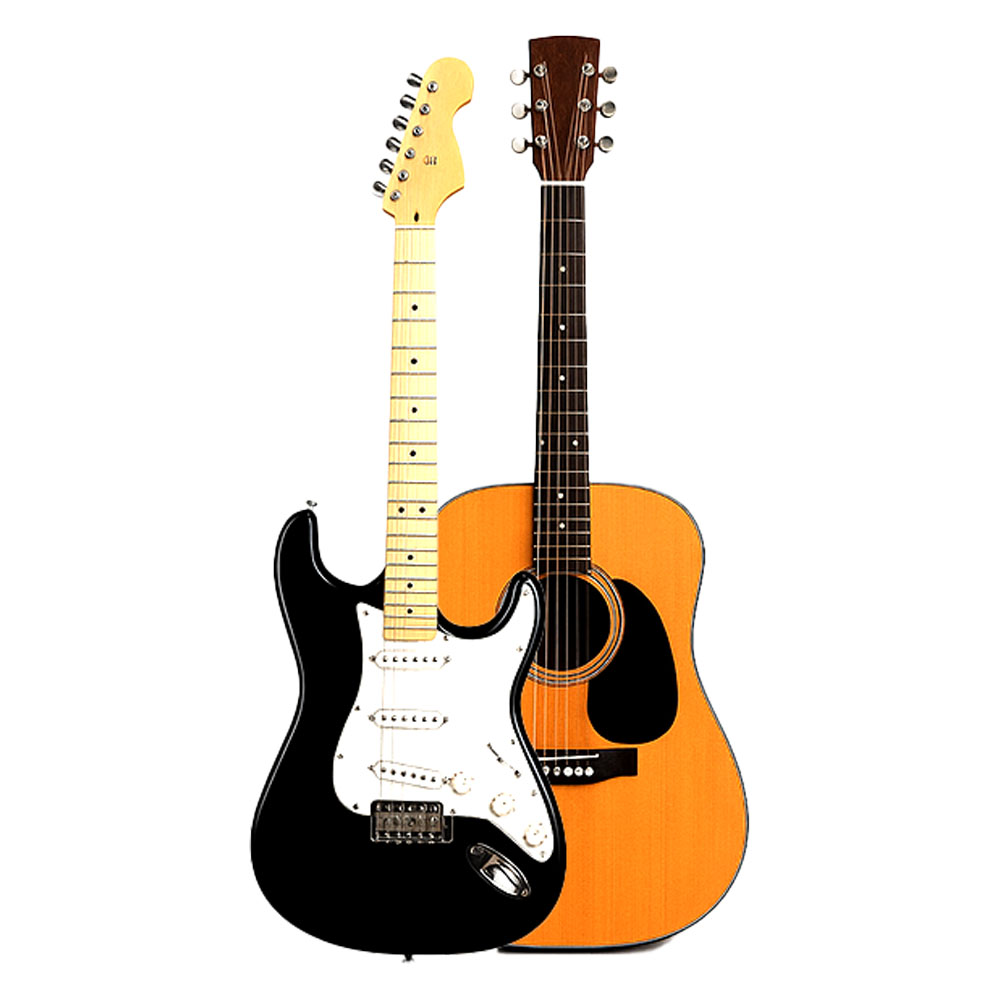
Overview of Malkmus's '1% of One' D6 Open Tuning
This unique guitar tuning, famously found in Stephen Malkmus & The Jicks' song "1% of One," transforms the standard guitar into a resonant, almost orchestral instrument. It's a complex and deeply characterful open tuning that hints at a D6 chord, offering a rich harmonic palette and a distinctly indie-rock sonic texture.
Verbal Analysis
The overall feel of this tuning is expansive and somewhat melancholic, yet capable of bright, ringing chords. The low D and A strings provide a strong, stable foundation, while the unusual placement of B notes and the higher F# create interesting harmonic tension and release. The significant drop of the 2nd string (B) by a full octave gives this tuning a distinct, almost baritone quality on that string, contributing to a broader sonic landscape. It encourages open, droning sounds and invites experimentation with melodic lines that weave through the sustained harmony.
Technical Analysis
The open notes for this tuning are: D2-A2-B2-F4#-B2-F5#. Examining the intervals relative to the lowest string (D), we find:
- 6th String (D): Root
- 5th String (A): Perfect 5th
- 4th String (B): Major 6th
- 3rd String (F#): Major 3rd
- 2nd String (B): Major 6th (an octave below the 4th string's B)
- 1st String (F#): Major 3rd (an octave above the 3rd string's F#)
This arrangement essentially outlines a D Major 6th chord (D-F#-A-B) across the open strings, but with a unique voicing due to the repeated B and F# notes at different octaves, and notably, the exceptionally low B on the 2nd string. The combination of D-A-B-F# creates a rich, full chord with plenty of internal resonance. The two B notes (B2 on strings 4 and 2) and two F# notes (F4# on string 3 and F5# on string 1) create complex voicings and harmonic possibilities.
Chordal Opportunities
Due to its open D6 character, this tuning makes a variety of chords readily accessible:
- Open D6 Chord: The open strings themselves form a beautiful D6 chord, perfect for rich arpeggios or strumming.
- Barre Chords: By barring across any fret, you can easily create movable 6th chords. For instance, barring at the 2nd fret would yield an E6 chord.
- Sus2 and Sus4 Variations: Experimenting with minor adjustments to the F# notes can easily lead to Dsus2 (replacing F# with E) or Dsus4 (replacing F# with G) variations, offering different moods.
- Implied Minor Chords: While inherently major, subtle melodic lines can hint at related minor keys, particularly B minor, given the prominence of the B notes.
- Drone and Pedals: The low D and A strings are excellent for creating drones, allowing melodic lines to be played on the higher strings over a sustained harmonic bed.
This tuning is highly recommended for guitarists looking to explore alternative voicings and expand their harmonic vocabulary beyond standard tunings.
How to Tune to Malkmus's '1% of One' D6 Open Tuning
To achieve this unique tuning, carefully adjust each string according to the instructions below. Please note the warnings about string gauge for significant pitch changes.
- 6th String (Low E): Tune down 2 semitones to D2.
- 5th String (A): Keep as is; no change (0 semitones) to A2.
- 4th String (D): Tune down 3 semitones to B2. This is a significant drop; ensure your string can handle the slack without buzzing.
- 3rd String (G): Tune down 1 semitone to F4#.
- 2nd String (B): Tune down 12 semitones (a full octave) to B2. Warning: Tuning down a full octave requires a much heavier gauge string than a standard B string to maintain tension and intonation. Using a standard gauge may result in excessive floppiness or breakage if attempting to tune back up.
- 1st String (High E): Tune up 2 semitones to F5#. Caution: Tuning up by 2 semitones increases string tension. Monitor your string and bridge for any undue stress. For changes exceeding 4 semitones (up or down), a different string gauge is generally advised.
Always tune slowly and check string tension carefully, especially with significant pitch changes.
Loading an obscene
amount of Chords
Loading an obscene
amount of Scales
Loading Tuning Map
Loading Tuning Data
Comments - have your say on DABF#BF#
Capos for DABF#BF#
| Capo | Tuning | Name |
|---|---|---|
| 0 | DABF#BF# | 1% Of One |
Please use the below form to submit a song for DABF#BF# that is not already on gtdb.org.
Videos for DABF#BF# on












Tuning Map
- Fret
- S6
- S5
- S4
- S3
- S2
- S1
- -13
- D#
- G#
- C#
- F#
- A#
- D#
- -12
- E
- A
- D
- G
- B
- E
- -11
- F
- A#
- D#
- G#
- C
- F
- -10
- F#
- B
- E
- A
- C#
- F#
- -9
- G
- C
- F
- A#
- D
- G
- -8
- G#
- C#
- F#
- B
- D#
- G#
- -7
- A
- D
- G
- C
- E
- A
- -6
- A#
- D#
- G#
- C#
- F
- A#
- -5
- B
- E
- A
- D
- F#
- B
- -4
- C
- F
- A#
- D#
- G
- C
- -3
- C#
- F#
- B
- E
- G#
- C#
- -2
- D
- G
- C
- F
- A
- D
- -1
- D#
- G#
- C#
- F#
- A#
- D#
- 0
- E
- A
- D
- G
- B
- E
- 1
- F
- A#
- D#
- G#
- C
- F
- 2
- F#
- B
- E
- A
- C#
- F#
- 3
- G
- C
- F
- A#
- D
- G
- 4
- G#
- C#
- F#
- B
- D#
- G#
- 5
- A
- D
- G
- C
- E
- A
- 6
- A#
- D#
- G#
- C#
- F
- A#
- 7
- B
- E
- A
- D
- F#
- B
- -2
- 0
- -3
- -1
- -12
- 2
 © 2026 GTDB