DABGAC Guitar Tuner
DABGAC DABGAC - Guitar tuning, chords & scales
Tuning Overview: DABGAC
The DABGAC Tuning is an intriguing, non-standard configuration for your guitar, described by its originator as something "stumbled across" that evokes a "great sense of wonder." This truly reflects the unique sonic landscape it presents.
Verbal Analysis:
This tuning immediately suggests an atmospheric and somewhat mysterious quality. With multiple strings tuned down, it tends to open up new resonances and harmonic possibilities not typically found in standard EADGBe. The "sense of wonder" likely comes from the unexpected chord voicings and the spaciousness created by the varied intervals between strings. It's an excellent choice for players looking to explore unique textures, drone-based music, ambient soundscapes, or compositions that lean into a modal or slightly dissonant, yet pleasing, character. It invites improvisation and a fresh approach to songwriting, moving away from conventional fretboard patterns.
Technical Analysis:
The open strings are tuned to D2-A2-B2-G3-A3-C4 (low to high). Let's break down the intervals:
- 6th String (D2) to 5th String (A2): Perfect 5th (P5)
- 5th String (A2) to 4th String (B2): Major 2nd (M2)
- 4th String (B2) to 3rd String (G3): Minor 6th (m6) above B, or a Perfect 4th (P4) if seen from G to B. This creates an interesting tension.
- 3rd String (G3) to 2nd String (A3): Major 2nd (M2)
- 2nd String (A3) to 1st String (C4): Minor 3rd (m3)
When strummed open, the combination of notes D-A-B-G-A-C forms a complex, rich chord. If we arrange the unique notes (D, G, A, B, C), it can be interpreted in several ways:
- As a D minor 7 (add 6, add 11), specifically D-A-C (Dm7) with added G (11th) and B (6th/13th). This points to a jazzy, modal, or suspended sound.
- Alternatively, it contains a G major triad (G-B-D), enhanced by A (a 9th from G) and C (an 11th from G).
The prominent low D-A fifth provides a solid harmonic foundation. The upper strings (G-A-C) combined with the B string create a chiming, open quality. This tuning is not designed for easy emulation of standard chord shapes; instead, it encourages exploring new fingerings and shapes across the fretboard, especially for arpeggios and drones. Common chord voicings may require rethinking, but simple one-finger or two-finger "drone" chords will sound rich and full, especially with the low D and A. For instance, fretting all strings at the same fret will produce unique harmonic clusters, and using open strings as drones against fretted notes will yield expansive sounds.
How to Tune to DABGAC
To achieve the DABGAC tuning from standard EADGBe, follow these string adjustments:
- 6th String (Low E): Tune down 2 semitones from E2 to D2.
- 5th String (A): Keep as is; no change (0 semitones) at A2.
- 4th String (D): Tune down 3 semitones from D3 to B2.
- 3rd String (G): Keep as is; no change (0 semitones) at G3.
- 2nd String (B): Tune down 2 semitones from B3 to A3.
- 1st String (High E): Tune down 4 semitones from E4 to C4. Caution: Tuning down 4 semitones for this string is a significant change. While generally safe, if you frequently use tunings with such large downward adjustments, consider using a heavier gauge string to maintain optimal tension and tone.
Open String Notes:
- String 6: D2
- String 5: A2
- String 4: B2
- String 3: G3
- String 2: A3
- String 1: C4
Loading an obscene
amount of Chords
Loading an obscene
amount of Scales
Loading Tuning Map
Loading Tuning Data
Comments - have your say on DABGAC
Capos for DABGAC
| Capo | Tuning | Name |
|---|---|---|
| 0 | DABGAC | DABGAC |
Please use the below form to submit a song for DABGAC that is not already on gtdb.org.
Videos for DABGAC on





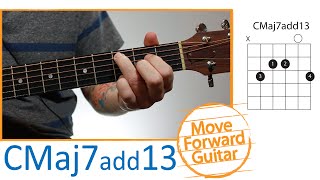


![Awesome Sounding Guitar Chord: D9 [X 5 4 5 5 5]](https://i.ytimg.com/vi/emJ59SDaZys/mqdefault.jpg)








Tuning Map
- Fret
- S6
- S5
- S4
- S3
- S2
- S1
- -13
- D#
- G#
- C#
- F#
- A#
- D#
- -12
- E
- A
- D
- G
- B
- E
- -11
- F
- A#
- D#
- G#
- C
- F
- -10
- F#
- B
- E
- A
- C#
- F#
- -9
- G
- C
- F
- A#
- D
- G
- -8
- G#
- C#
- F#
- B
- D#
- G#
- -7
- A
- D
- G
- C
- E
- A
- -6
- A#
- D#
- G#
- C#
- F
- A#
- -5
- B
- E
- A
- D
- F#
- B
- -4
- C
- F
- A#
- D#
- G
- C
- -3
- C#
- F#
- B
- E
- G#
- C#
- -2
- D
- G
- C
- F
- A
- D
- -1
- D#
- G#
- C#
- F#
- A#
- D#
- 0
- E
- A
- D
- G
- B
- E
- 1
- F
- A#
- D#
- G#
- C
- F
- 2
- F#
- B
- E
- A
- C#
- F#
- 3
- G
- C
- F
- A#
- D
- G
- 4
- G#
- C#
- F#
- B
- D#
- G#
- 5
- A
- D
- G
- C
- E
- A
- 6
- A#
- D#
- G#
- C#
- F
- A#
- 7
- B
- E
- A
- D
- F#
- B
- -2
- 0
- -3
- 0
- -2
- -4
 © 2026 GTDB