DAEF#AC# Guitar Tuner
DAEF#AC# | DAEG♭AD♭ D A E F# A C# (OPEN DMAJ9) - Guitar tuning, chords & scales
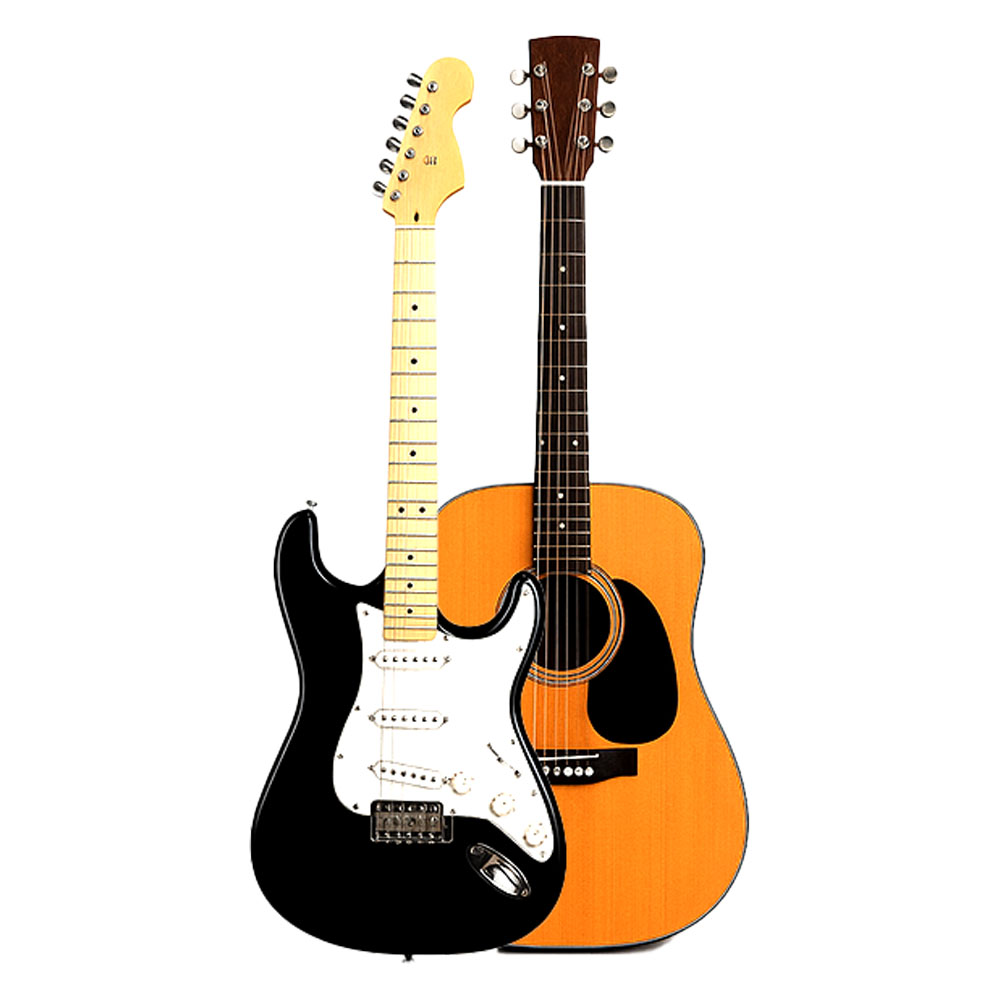
The "D A E F# A C# (OPEN DMAJ9)" tuning, often referred to simply as Open Dmaj9, is a rich and resonant guitar tuning particularly well-suited for acoustic fingerstyle playing. As its name suggests, when strummed open, all six strings combine to form a full D Major 9th chord, creating a beautifully expansive and complex sound without any fretting.
Technically, the open strings spell out the notes D2-A2-E3-F#4-A3-C#5. This arrangement contains the root (D), perfect fifth (A), major ninth (E), major third (F#), another perfect fifth (A), and major seventh (C#) of a Dmaj9 chord. The presence of these crucial chord tones spread across the fretboard provides a lush harmonic foundation. The two A notes (A2 and A3) and the high C# (C#5) contribute to a shimmering, ethereal quality, making it excellent for creating ambient textures and intricate arpeggios.
This tuning naturally lends itself to a wealth of musical possibilities. Strumming all open strings delivers a powerful Dmaj9. By simply barring across various frets, you can easily transpose the Dmaj9 chord to other major 9th chords (e.g., barring at the 5th fret yields Gmaj9). Beyond full barre chords, the open string voicings make it incredibly easy to create interesting partial chords and melodic lines by fretting just one or two strings. For instance, removing the E (E3) from the open Dmaj9 gives you a Dmaj7. Experimenting with a single finger on a string can unlock surprising harmonies. This tuning encourages exploration beyond standard chord shapes, making it a favorite for songwriters and instrumentalists looking for unique sonic palettes.
Tuning Notes:
The strings are tuned to the following notes:
- String 6 (Low E String): D2
- String 5 (A String): A2
- String 4 (D String): E3
- String 3 (G String): F#4
- String 2 (B String): A3
- String 1 (High E String): C#5
How to Tune:
To achieve the "D A E F# A C# (OPEN DMAJ9)" tuning from standard EADGBe tuning, follow these adjustments:
- String 6 (Low E to D): Tune down 2 semitones. Your string will move from E to D2.(Movement: -2 semitones)
- String 5 (A to A): Keep as is; no change. Your string remains at A2.(Movement: 0 semitones)
- String 4 (D to E): Tune up 2 semitones. Your string will move from D to E3.(Movement: +2 semitones)
- String 3 (G to F#): Tune down 1 semitone. Your string will move from G to F#4.(Movement: -1 semitone)
- String 2 (B to A): Tune down 2 semitones. Your string will move from B to A3.(Movement: -2 semitones)
- String 1 (High E to C#): Tune down 3 semitones. Your string will move from E to C#5.(Movement: -3 semitones)
Important Note:Several strings require significant tuning changes. While none exceed the +/- 4 semitone threshold where a different gauge string is generally advised, always tune carefully and ensure your instrument can handle the altered string tension. Gradual tuning and a reliable tuner are recommended.
Loading an obscene
amount of Chords
Loading an obscene
amount of Scales
Loading Tuning Map
Loading Tuning Data
Comments - have your say on DAEF#AC#
Capos for DAEF#AC#
| Capo | Tuning | Name |
|---|---|---|
| -1 | C#G#D#FG#C | Emo Open C#maj9 |
| 0 | DAEF#AC# | D A E F# A C# (OPEN DMAJ9) |
| 1 | D#A#FGA#D | Coffey Tuning |
Songs tuned to DAEF#AC#
Know a song in DAEF#AC#?
Please use the below form to submit a song for DAEF#AC# that is not already on gtdb.org.
Videos for DAEF#AC# on







Tuning Map
- Fret
- S6
- S5
- S4
- S3
- S2
- S1
- -13
- D#
- G#
- C#
- F#
- A#
- D#
- -12
- E
- A
- D
- G
- B
- E
- -11
- F
- A#
- D#
- G#
- C
- F
- -10
- F#
- B
- E
- A
- C#
- F#
- -9
- G
- C
- F
- A#
- D
- G
- -8
- G#
- C#
- F#
- B
- D#
- G#
- -7
- A
- D
- G
- C
- E
- A
- -6
- A#
- D#
- G#
- C#
- F
- A#
- -5
- B
- E
- A
- D
- F#
- B
- -4
- C
- F
- A#
- D#
- G
- C
- -3
- C#
- F#
- B
- E
- G#
- C#
- -2
- D
- G
- C
- F
- A
- D
- -1
- D#
- G#
- C#
- F#
- A#
- D#
- 0
- E
- A
- D
- G
- B
- E
- 1
- F
- A#
- D#
- G#
- C
- F
- 2
- F#
- B
- E
- A
- C#
- F#
- 3
- G
- C
- F
- A#
- D
- G
- 4
- G#
- C#
- F#
- B
- D#
- G#
- 5
- A
- D
- G
- C
- E
- A
- 6
- A#
- D#
- G#
- C#
- F
- A#
- 7
- B
- E
- A
- D
- F#
- B
- -2
- 0
- 2
- -1
- -2
- -3
 © 2026 GTDB