D#A#A#GFA# Guitar Tuner
D#A#A#GFA# | E♭B♭B♭GFB♭ Open D#add9 - Guitar tuning, chords & scales
Verbal Description
This is an intriguing tuning, affectionately named "open D#add9" by its creator. It's described as sounding "pretty nice" and being particularly good for arpeggios, discovered through an experimental process of strumming and tuning until it resonated just right. The open strings create a rich, full sound that immediately suggests a lush harmonic landscape, perfect for intricate melodic lines or atmospheric textures.
Technical Analysis
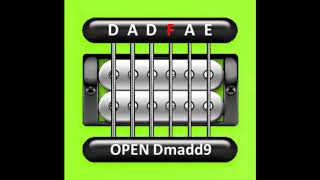
Technically, this tuning sets up an open D#add9 (D# Major 2nd) chord across the strings. The notes are D#3, A#3, A#3, G3, F3, A#4, from the lowest to highest string. Breaking down the chord tones relative to D# as the root:
- D# (Root): Provided by the 6th string, establishing the tonic.
- G (Major Third): On the 3rd string, giving the tuning its major quality.
- A# (Perfect Fifth): Present on the 5th, 4th, and 1st strings. The abundance of the fifth provides a strong, resonant foundation and a full-bodied sustain, which is excellent for arpeggiation.
- F (Major Second/Ninth): Found on the 2nd string, this is the defining "add9" element, adding a contemporary, open, and slightly suspended quality to the major chord.
The arrangement of notes, particularly the stacked A#s on the 5th, 4th, and 1st strings, allows for a powerful, ringing sustain. The close proximity of G (major third) and F (major second/ninth) on the 3rd and 2nd strings creates interesting intervallic relationships that can be exploited for melodic and harmonic embellishments. The tuning's structure makes it ideal for fingerstyle, as the open chord provides an excellent drone, and arpeggiated patterns will naturally highlight the rich harmonic content. Barre chords up the neck will transpose this D#add9 voicing, creating other add9 chords, offering a consistent harmonic framework.
How to Tune
Please be aware of significant string tension changes for some strings. For changes exceeding 4 semitones (up or down), consider using a different string gauge to avoid breakage or excessive looseness.
- 6th String (Low E): Tune down 1 semitone from E to D#.
- 5th String (A): Tune up 1 semitone from A to A#.
- 4th String (D): Tune down 4 semitones from D to A#. (Note: This is a significant drop. Standard strings may feel loose.)
- 3rd String (G): Keep as is; no change (0 semitones).
- 2nd String (B): Tune down 6 semitones from B to F. (Warning: This is a very large drop. A heavier gauge string is advised for optimal playability and tension.)
- 1st String (High e): Tune down 6 semitones from E to A#. (Warning: This is a very large drop. A heavier gauge string is advised for optimal playability and tension.)
The open notes for this tuning are as follows:
- 6th String: D3#
- 5th String: A3#
- 4th String: A3#
- 3rd String: G3
- 2nd String: F3
- 1st String: A4#
Loading an obscene
amount of Chords
Loading an obscene
amount of Scales
Loading Tuning Map
Loading Tuning Data
Comments - have your say on D#A#A#GFA#
Capos for D#A#A#GFA#
| Capo | Tuning | Name |
|---|---|---|
| 0 | D#A#A#GFA# | Open D#add9 |
Please use the below form to submit a song for D#A#A#GFA# that is not already on gtdb.org.
Videos for D#A#A#GFA# on












Tuning Map
- Fret
- S6
- S5
- S4
- S3
- S2
- S1
- -13
- D#
- G#
- C#
- F#
- A#
- D#
- -12
- E
- A
- D
- G
- B
- E
- -11
- F
- A#
- D#
- G#
- C
- F
- -10
- F#
- B
- E
- A
- C#
- F#
- -9
- G
- C
- F
- A#
- D
- G
- -8
- G#
- C#
- F#
- B
- D#
- G#
- -7
- A
- D
- G
- C
- E
- A
- -6
- A#
- D#
- G#
- C#
- F
- A#
- -5
- B
- E
- A
- D
- F#
- B
- -4
- C
- F
- A#
- D#
- G
- C
- -3
- C#
- F#
- B
- E
- G#
- C#
- -2
- D
- G
- C
- F
- A
- D
- -1
- D#
- G#
- C#
- F#
- A#
- D#
- 0
- E
- A
- D
- G
- B
- E
- 1
- F
- A#
- D#
- G#
- C
- F
- 2
- F#
- B
- E
- A
- C#
- F#
- 3
- G
- C
- F
- A#
- D
- G
- 4
- G#
- C#
- F#
- B
- D#
- G#
- 5
- A
- D
- G
- C
- E
- A
- 6
- A#
- D#
- G#
- C#
- F
- A#
- 7
- B
- E
- A
- D
- F#
- B
- -1
- 1
- -4
- 0
- -6
- -6
 © 2026 GTDB