D#A#D#G#C#F# Guitar Tuner
D#A#D#G#C#F# | E♭B♭E♭A♭D♭G♭ D#a#d#g#c#f# - Guitar tuning, chords & scales
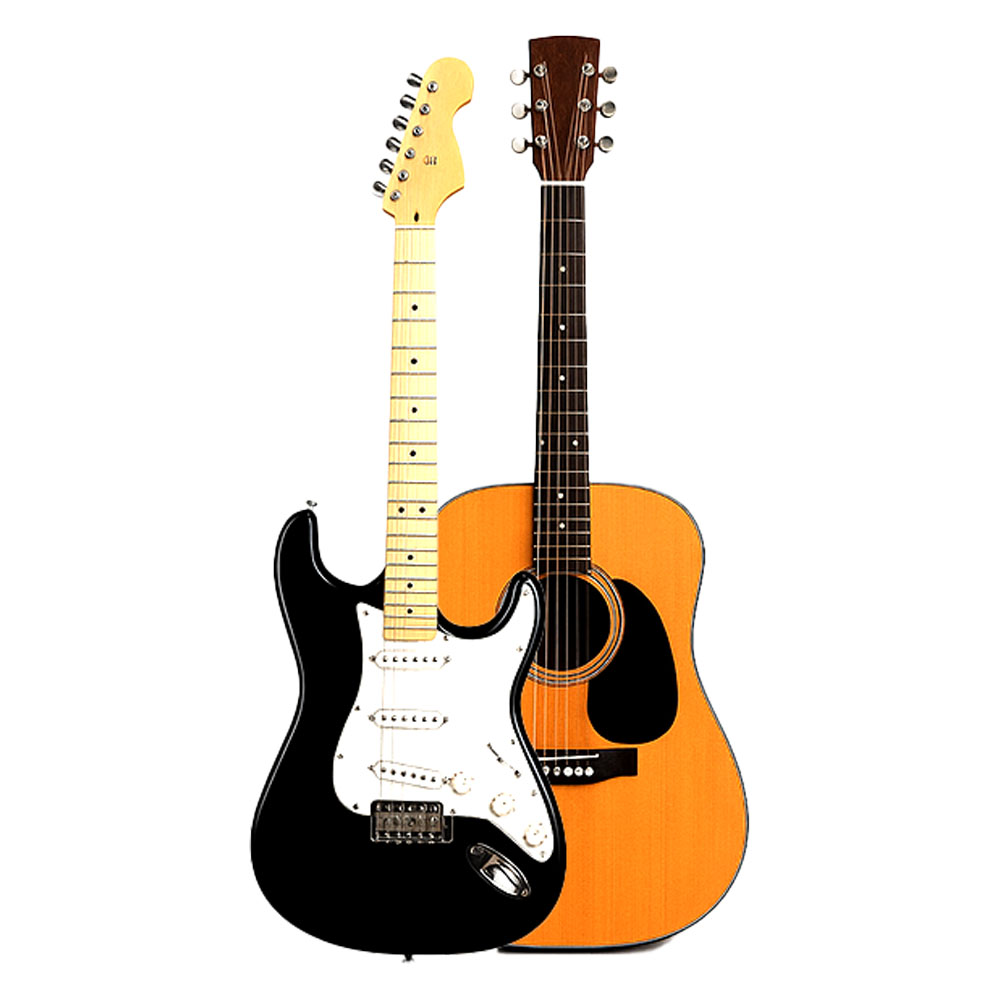
Tuning Analysis: Open D# Minor 7th Voicing
This unique guitar tuning, which we've named 'Open D# Minor 7th Voicing', presents a deep and resonant sonic character, perfect for exploring darker and more complex harmonies. Originally described as "A tuning from a username I found," it offers a distinctive foundation for various musical styles, particularly those requiring a rich, full low end and a melancholic or dramatic feel. The open strings immediately establish a powerful D# minor sound, making it ideal for metal, hard rock, blues, or ambient soundscapes.
Verbal Analysis
The 'Open D# Minor 7th Voicing' tuning is built around the D# minor chord, enriched with additional harmonic layers. The presence of D# on both the 6th (lowest) and 4th strings creates a strong, foundational root, allowing for powerful drones and sustained bass notes. The A# on the 5th string provides the perfect fifth, anchoring the tuning firmly in the D# key. What makes this tuning truly unique are the minor third (F# on the 1st string) and minor seventh (C# on the 2nd string), which explicitly outline a D# minor 7th chord. The G# on the 3rd string adds a distinctive suspended fourth quality relative to the D# root, creating tension and opportunities for intriguing melodic movements. This configuration can inspire both heavy, downtuned riffs and intricate, jazz-inflected voicings.
Technical Analysis
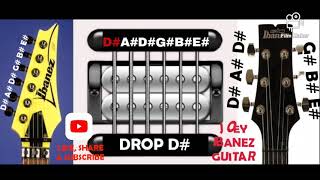
The open strings are tuned as follows, from low to high: D#2, A#2, D#3, G#3, C#4, F#4. This setup explicitly forms a D# minor 7th chord (D#, F#, A#, C#) with an additional G# (the perfect fourth above D#). The intervals from the lowest D# are: Perfect 5th (A#), Octave (D#), Perfect 4th (G#), Minor 7th (C#), Minor 3rd (F#). This interval structure makes for a very coherent, yet harmonically rich, open sound. The doubled D# notes (6th and 4th strings) facilitate powerful strumming and allow for easily accessible octave voicings. The overall range of the tuning is broad, providing both deep bass notes and bright trebles.
Chords and Accessibility
With the open strings forming a D# minor 7th sus4 chord, this tuning provides an immediate expressive palette. Simple barre chords become very effective:
- Open Strings: A rich D# minor 7th (add G# / sus4) chord.
- Barre at 1st Fret: By barring all strings at the first fret, you create an E minor 7th (add A / sus4) chord.
- Barre at 2nd Fret: Results in an F minor 7th (add A# / sus4) chord.
How to Tune
To achieve the 'Open D# Minor 7th Voicing' tuning from standard E A D G B E:
- 6th String (Low E): Tune down 1 semitone to D#2.
- 5th String (A): Tune up 1 semitone to A#2.
- 4th String (D): Tune up 1 semitone to D#3.
- 3rd String (G): Tune up 1 semitone to G#3.
- 2nd String (B): Tune up 2 semitones to C#4.
- 1st String (High E): Tune up 2 semitones to F#4.
Please take care when tuning. While most string movements are minor, the 2nd and 1st strings are tuned up by 2 semitones. Always tune slowly and listen carefully to avoid snapping strings. For movements exceeding 4 semitones up or down, a different gauge string is generally recommended, but in this case, the movements are within safe limits for standard strings with careful tuning.
6th String: Tuned to D#2
5th String: Tuned to A#2
4th String: Tuned to D#3
3rd String: Tuned to G#3
2nd String: Tuned to C#4
1st String: Tuned to F#4
Loading an obscene
amount of Chords
Loading an obscene
amount of Scales
Loading Tuning Map
Loading Tuning Data
Comments - have your say on D#A#D#G#C#F#
Capos for D#A#D#G#C#F#
| Capo | Tuning | Name |
|---|---|---|
| -11 | EBEADG | Baritone Drop E - Altered |
| -10 | FCFA#D#G# | Drop F Variation |
| -7 | G#D#G#C#F#B | G#D#G#C#F#B |
| -6 | AEADGC | Dropped A |
| -5 | A#FA#D#G#C# | Drop A#/bb Fourths |
| -4 | BF#BEAD | Drop B Fourths |
| -3 | CGCFA#D# | CGCFAD |
| -2 | C#G#C#F#BE | Save Face |
| -1 | DADGCF | Open F 6/9 |
| 0 | D#A#D#G#C#F# | D#a#d#g#c#f# |
| 1 | EBEADG | Better Standard |
Please use the below form to submit a song for D#A#D#G#C#F# that is not already on gtdb.org.
Videos for D#A#D#G#C#F# on




Tuning Map
- Fret
- S6
- S5
- S4
- S3
- S2
- S1
- -13
- D#
- G#
- C#
- F#
- A#
- D#
- -12
- E
- A
- D
- G
- B
- E
- -11
- F
- A#
- D#
- G#
- C
- F
- -10
- F#
- B
- E
- A
- C#
- F#
- -9
- G
- C
- F
- A#
- D
- G
- -8
- G#
- C#
- F#
- B
- D#
- G#
- -7
- A
- D
- G
- C
- E
- A
- -6
- A#
- D#
- G#
- C#
- F
- A#
- -5
- B
- E
- A
- D
- F#
- B
- -4
- C
- F
- A#
- D#
- G
- C
- -3
- C#
- F#
- B
- E
- G#
- C#
- -2
- D
- G
- C
- F
- A
- D
- -1
- D#
- G#
- C#
- F#
- A#
- D#
- 0
- E
- A
- D
- G
- B
- E
- 1
- F
- A#
- D#
- G#
- C
- F
- 2
- F#
- B
- E
- A
- C#
- F#
- 3
- G
- C
- F
- A#
- D
- G
- 4
- G#
- C#
- F#
- B
- D#
- G#
- 5
- A
- D
- G
- C
- E
- A
- 6
- A#
- D#
- G#
- C#
- F
- A#
- 7
- B
- E
- A
- D
- F#
- B
- -1
- 1
- 1
- 1
- 2
- 2
 © 2026 GTDB