FGAECD# Guitar Tuner
FGAECD# | FGAECE♭ Dissonant F - Guitar tuning, chords & scales
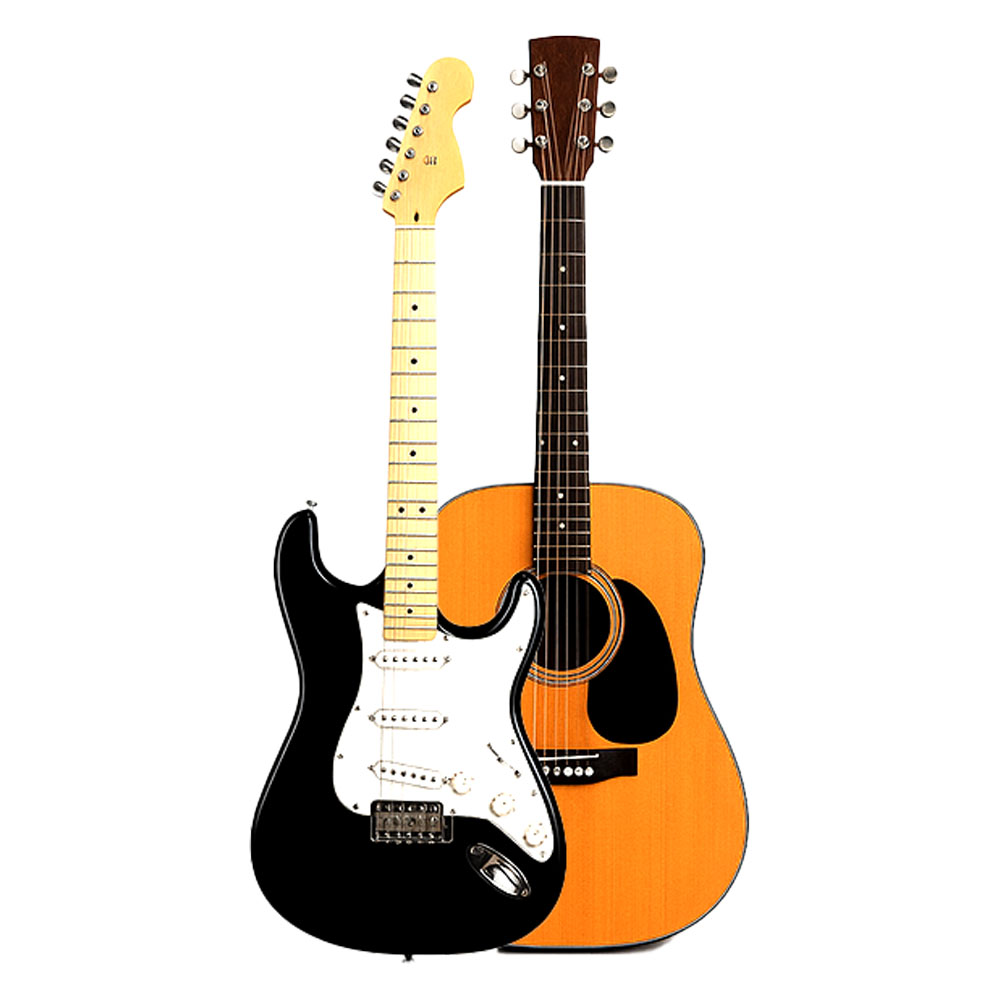
The tuning, originally named "Maybe" and here renamed "Dissonant F", is an experimental and highly chromatic tuning for the guitar that pushes the boundaries of traditional harmony. As its new name suggests, it implies an F root but introduces significant dissonance, creating a complex and somewhat jarring sonic landscape. It features an exceptionally wide range across the strings, from a low F2 to a high D#5, which contributes to its unique and expansive character.
Technical Analysis:
- The bass strings are tuned to F2-G2-A2, forming a sequential, almost diatonic progression. This foundation provides a strong, moving bassline potential, reminiscent of sus2 or open fifth voicings, allowing for rich low-end drones or melodic figures.
- Moving up the neck, we find E3, C4, and D#5. When considering the open strings as a whole (F-G-A-E-C-D#), the tuning presents a striking array of intervals. From the root F, we have a Major 2nd (G), a Major 3rd (A), a Major 7th (E, an octave higher), a Perfect 5th (C, two octaves higher), and an Augmented 6th (D#, three octaves higher).
- The presence of both E natural (M7 to F) and D# (functioning as Eb, a b7 to F, or an A6) creates a significant semitone clash, especially when all strings are strummed open. This inherent dissonance is a defining characteristic, making it challenging for conventional open chords but ripe for modern, experimental, or ambient music.
- Due to the cluster of E3, C4, and D#5 on the higher strings, simple major or minor triads are not readily available with an open strum. However, fingerpicking patterns or specific voicings that omit certain strings could unlock intriguing harmonies. For instance, the C4-E3 interval offers a major third, and combining this with the low F might hint at an Fmaj7 chord, but the D#5 will add a sharp, unresolved quality.
- This tuning encourages exploration beyond standard chord shapes, leading to unique arpeggios, dissonant clusters, and expressive melodic lines that leverage the wide intervallic leaps and the particular harmonic tension. It could be particularly effective for soundscapes, avant-garde compositions, or genres that embrace atonality and complex harmonies.
How to Tune:
To achieve this unique tuning, follow these precise string adjustments from standard guitar tuning (E2-A2-D3-G3-B3-E4), though please note the high E string (String 1) is assumed to start at E5 for this specific set of movements, as indicated by the 'string_movements' data.
- String 6 (Low E to F2): Tune up 1 semitones. (From E2 to F2)
- String 5 (A to G2): Tune down 2 semitones. (From A2 to G2)
- String 4 (D to A2): Tune down 5 semitones. (From D3 to A2). Caution: Tuning down 5 semitones is a significant change; a lighter gauge string is advised to maintain proper tension and intonation.
- String 3 (G to E3): Tune down 3 semitones. (From G3 to E3)
- String 2 (B to C4): Tune up 1 semitones. (From B3 to C4)
- String 1 (High E to D#5): Tune down 1 semitones. (From E5 to D#5). Note: This movement implies a starting note of E5 for String 1. For standard E4 guitars, achieving D#5 would require tuning up significantly (11 semitones) and might necessitate a different string gauge or present tension issues. Please ensure your instrument can safely accommodate this.
Here are the open string notes for the "Dissonant F" tuning:
- String 6: F2
- String 5: G2
- String 4: A2
- String 3: E3
- String 2: C4
- String 1: D#5
Loading an obscene
amount of Chords
Loading an obscene
amount of Scales
Loading Tuning Map
Loading Tuning Data
Comments - have your say on FGAECD#
Capos for FGAECD#
| Capo | Tuning | Name |
|---|---|---|
| 0 | FGAECD# | Dissonant F |
Please use the below form to submit a song for FGAECD# that is not already on gtdb.org.
Videos for FGAECD# on









![[Music Theory in 5m #20] Make you music life easier with PENTATONIC SCALES](https://i.ytimg.com/vi/b_HEJwW4OFQ/mqdefault.jpg)
Tuning Map
- Fret
- S6
- S5
- S4
- S3
- S2
- S1
- -13
- D#
- G#
- C#
- F#
- A#
- D#
- -12
- E
- A
- D
- G
- B
- E
- -11
- F
- A#
- D#
- G#
- C
- F
- -10
- F#
- B
- E
- A
- C#
- F#
- -9
- G
- C
- F
- A#
- D
- G
- -8
- G#
- C#
- F#
- B
- D#
- G#
- -7
- A
- D
- G
- C
- E
- A
- -6
- A#
- D#
- G#
- C#
- F
- A#
- -5
- B
- E
- A
- D
- F#
- B
- -4
- C
- F
- A#
- D#
- G
- C
- -3
- C#
- F#
- B
- E
- G#
- C#
- -2
- D
- G
- C
- F
- A
- D
- -1
- D#
- G#
- C#
- F#
- A#
- D#
- 0
- E
- A
- D
- G
- B
- E
- 1
- F
- A#
- D#
- G#
- C
- F
- 2
- F#
- B
- E
- A
- C#
- F#
- 3
- G
- C
- F
- A#
- D
- G
- 4
- G#
- C#
- F#
- B
- D#
- G#
- 5
- A
- D
- G
- C
- E
- A
- 6
- A#
- D#
- G#
- C#
- F
- A#
- 7
- B
- E
- A
- D
- F#
- B
- 1
- -2
- -5
- -3
- 1
- -1
 © 2026 GTDB