GGDD Violin Tuner
GGDD Biber Resurrection - Violin tuning, chords & scales
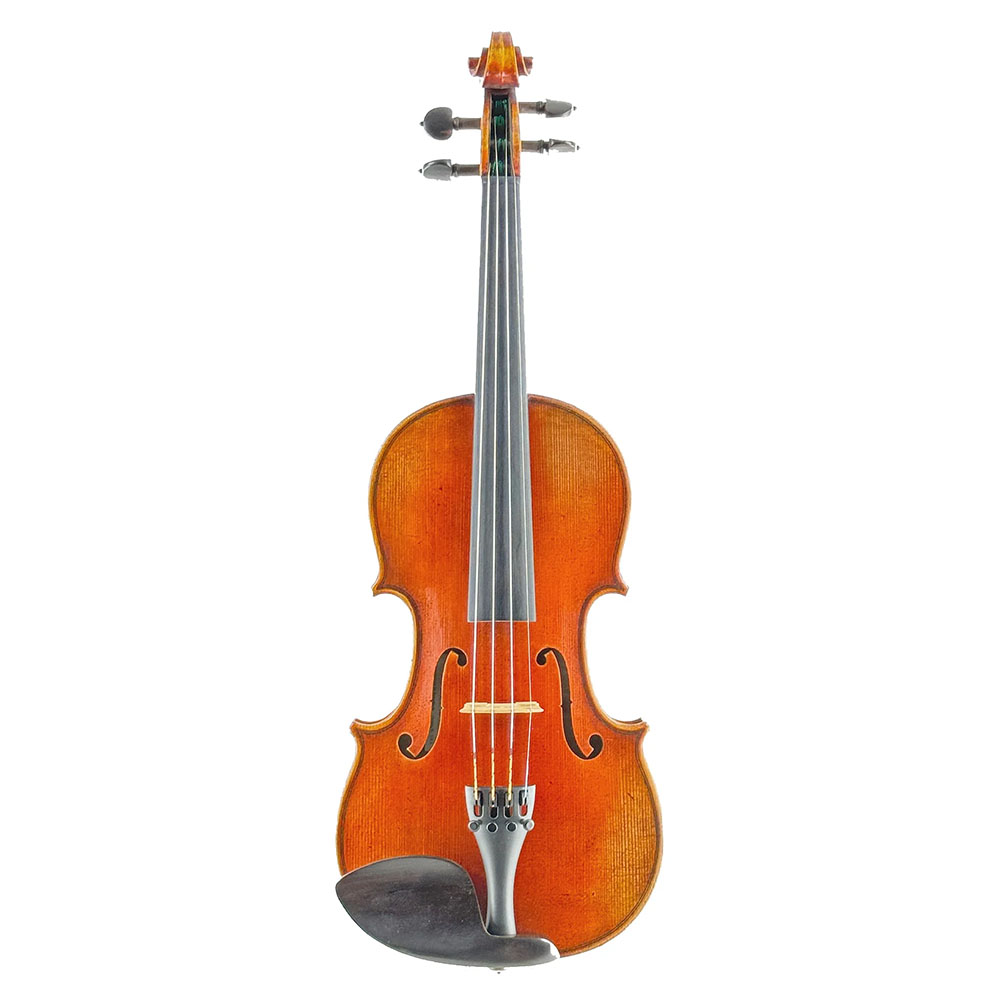
The Biber Resurrection tuning for Violin is a highly specialized and historically significant reentrant tuning. It was specifically designed by Heinrich Ignaz Franz Biber for his 11th Rosary Sonata, "The Resurrection", and is a prime example of scordatura – the practice of altering the violin's standard tuning to achieve unique sonic effects and facilitate complex polyphonic textures.
Verbal Analysis:
This tuning profoundly transforms the violin's sound palette, creating a deeply resonant and somewhat drone-like quality. With two G notes (G2 and G3) and two D notes (D3 and D4) across its four strings, it emphasizes perfect fifths and octaves centered around the keys of G and D. The reentrant nature – where the third string (G3) is pitched higher than the second string (D3) – allows for unexpected voice leading. This enables melodies to weave across strings in a way that would be impossible in standard tuning, producing rich harmonies and sustaining tones that resonate sympathetically, perfectly suited for Biber's demanding polyphonic writing.
Technical Analysis:
The open strings are tuned to G2, G3, D3, D4 from the lowest to highest physical string. Let's analyze the intervals:
- String 4 (G2) to String 3 (G3): A perfect octave (8th).
- String 3 (G3) to String 2 (D3): A perfect fourth down. This is the reentrant interval, as the lower-numbered physical string (3) is tuned higher in pitch than the next higher-numbered physical string (2).
- String 2 (D3) to String 1 (D4): A perfect octave (8th).
The final open string notes for this tuning are:
- String 4 (Lowest): G2
- String 3: G3
- String 2: D3
- String 1 (Highest): D4
How to Tune (from an inferred base tuning)
To achieve the Biber Resurrection tuning, you will need to adjust your violin strings. Please note: The tuning instructions below are derived by working backward from the specified target notes and the provided semitone movements. This method infers a starting violin tuning of C3 G3 A3 E4 (from lowest to highest string) for consistency between the target notes and the semitone adjustments. If your violin is currently in standard G3 D4 A4 E5 tuning, the specific semitone movements required to reach these target notes would differ.
- String 4 (Lowest String): Starting from an inferred C3, tune down 7 semitones to reach G2. This is a significant adjustment; for optimal performance and instrument safety, a different gauge string is advised if regularly using this tuning.
- String 3: Starting from an inferred G3, keep as is; no change (0 semitones) to remain at G3.
- String 2: Starting from an inferred A3, tune down 9 semitones to reach D3. This is a very substantial change, and using a dedicated, lighter gauge string is highly recommended to prevent string breakage or damage to your instrument.
- String 1 (Highest String): Starting from an inferred E4, tune down 2 semitones to reach D4.
Caution: Tuning strings significantly up or down (exceeding 4 semitones) can place excessive stress on your instrument and strings, potentially leading to breakage or damage. Adjustments of 7 and 9 semitones, as indicated for this tuning, are considerable and warrant careful consideration of string tension and gauge selection for optimal performance and instrument safety.
Loading an obscene
amount of Chords
Loading an obscene
amount of Scales
Loading Tuning Map
Loading Tuning Data
Comments - have your say on GGDD
Capos for GGDD
| Capo | Tuning | Name |
|---|---|---|
| 0 | GGDD | Biber Resurrection |
Please use the below form to submit a song for GGDD that is not already on gtdb.org.
Videos for GGDD on


![Justin Bieber - Boyfriend ♫ [Guitar & Piano Chords & Lyrics] (Mike Sal Cover)](https://i.ytimg.com/vi/MJqPK1UNQag/mqdefault.jpg)

















Tuning Map
- Fret
- S4
- S3
- S2
- S1
- -13
- C#
- F#
- A#
- D#
- -12
- D
- G
- B
- E
- -11
- D#
- G#
- C
- F
- -10
- E
- A
- C#
- F#
- -9
- F
- A#
- D
- G
- -8
- F#
- B
- D#
- G#
- -7
- G
- C
- E
- A
- -6
- G#
- C#
- F
- A#
- -5
- A
- D
- F#
- B
- -4
- A#
- D#
- G
- C
- -3
- B
- E
- G#
- C#
- -2
- C
- F
- A
- D
- -1
- C#
- F#
- A#
- D#
- 0
- D
- G
- B
- E
- 1
- D#
- G#
- C
- F
- 2
- E
- A
- C#
- F#
- 3
- F
- A#
- D
- G
- 4
- F#
- B
- D#
- G#
- 5
- G
- C
- E
- A
- 6
- G#
- C#
- F
- A#
- 7
- A
- D
- F#
- B
- -7
- 0
- -9
- -2
 © 2026 GTDB