A#A#D#GA#D Guitar Tuner
A#A#D#GA#D | B♭B♭E♭GB♭D B Flat Or Not - Guitar tuning, chords & scales
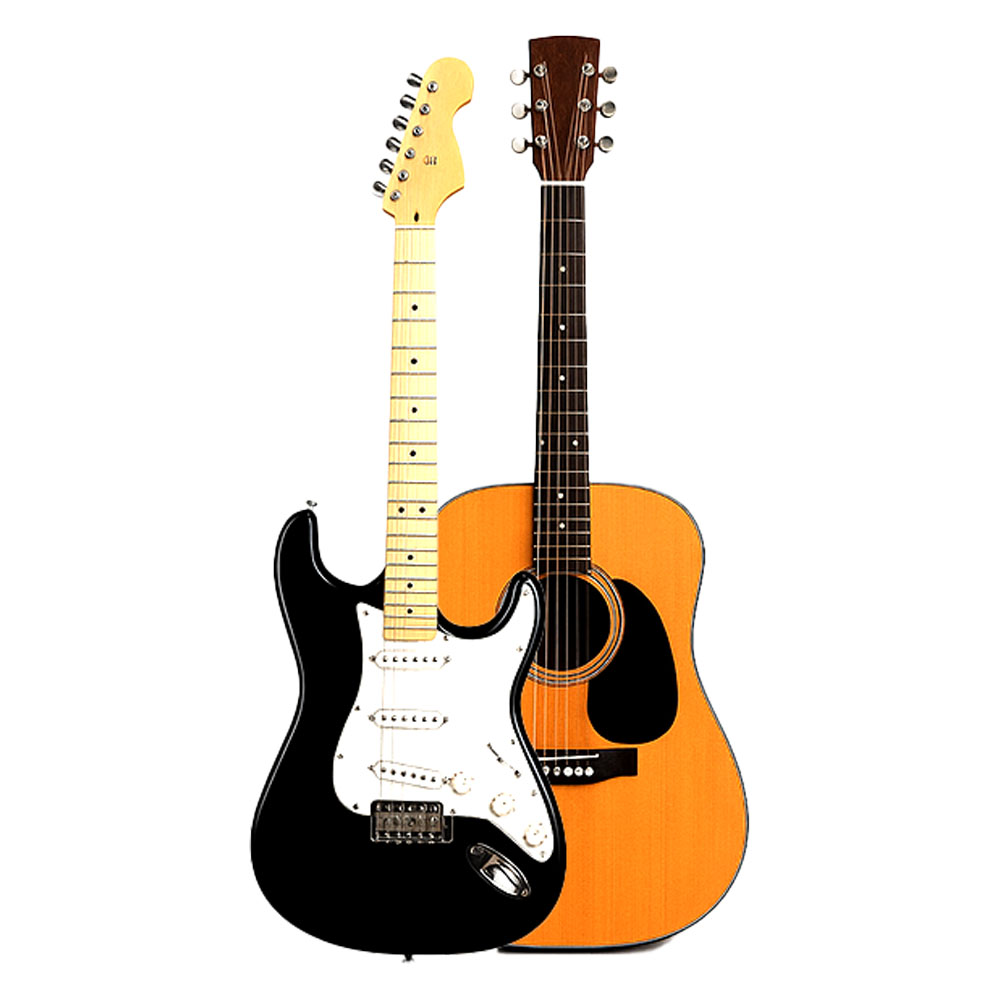
This unique tuning, which we've named Open Bb6 Tuning, offers a rich harmonic landscape, particularly well-suited for fingerstyle and folk playing as described by its user. It sets the guitar strings to notes that collectively form a Bb Major 6th chord, providing a full, resonant sound when strummed open.
Technical Analysis:
The open strings are tuned to Bb2, Bb3, Eb4, G3, Bb4, and D4 (low to high). These notes combine to form a Bb Major 6th chord (Bb - D - Eb - G), with several octaves and a perfect 4th (Eb) filling out the voicing. This structure creates a lush, slightly melancholic, but very open and inviting sound, making it excellent for drones, arpeggios, and expressive melodic lines. The repetition of Bb across different octaves provides a strong root foundation, while the Eb (a perfect 4th from Bb) and G (a major 6th from Bb) add color and harmonic interest, forming the complete Bb Major 6th chord.
Chords within Reach:
With the open tuning providing a Bb Major 6th, many related chords become easily accessible with minimal fretting:
- Bb Major 6th (Open): Simply strumming all open strings yields a full Bb Major 6th chord.
- Bb Major: By lightly fretting the 3rd string at the 4th fret (to get Bb) and the 4th string at the 6th fret (to get D), you can reinforce the root and third, or simply avoid the Eb (4th string) and G (3rd string) for a simpler Bb major sound.
- G Minor 7th: This chord shares many notes with Bb Maj6 (G-Bb-D-F). By playing an F on the 1st string (D to F is a minor 3rd, 3 frets up) and leveraging the open G3 on the 3rd string and Bb notes on the 6th, 5th, and 2nd strings, a Gmin7 can be easily voiced.
- Eb Major: Sliding a finger up two frets across the 5th, 4th, 2nd, and 1st strings will yield an Eb Major chord, leveraging the Eb on the 4th string and the Bb notes.
- Droning Chords: The presence of multiple Bb notes makes it easy to create drones in the key of Bb. Moving a single finger across various frets can create interesting suspended or augmented voicings against the open Bb, perfect for atmospheric folk and fingerstyle passages.
The open voicing makes this tuning particularly good for exploring modal harmony and creating spacious, ambient soundscapes, aligning perfectly with its described use for fingerstyle and folk.
How to Tune:
To achieve the rich sound of the Open Bb6 Tuning from standard EADGBE tuning, follow these precise string adjustments. Please note that for some strings, the specified semitone movement from standard tuning leads to a note an octave lower than the final target note as provided in the tuning's full note description. This may imply that the 'string_movements' describe relative pitch changes, or that a different string gauge or intentional octave shifts are involved to reach the final 'tuning_notes'. Always use a reliable tuner.
- 6th String (Low E): Tune down 6 semitones from its standard E2. This will bring it to A#2 (Bb2). This is a significant drop, so proceed with care. A heavier gauge string for this position might be advisable for optimal tension and tone.
- 5th String (A): Tune up 1 semitone from its standard A2. This will bring it to A#2 (Bb2). While the movement is small and safe for string tension, the final target note for this tuning is A#3 (Bb3). To achieve A#3 from a standard A2 string, a much larger adjustment (13 semitones up) would typically be required.
- 4th String (D): Tune up 1 semitone from its standard D3. This will bring it to D#3 (Eb3). This is a small and safe adjustment. However, the final target note for this tuning is D#4 (Eb4). To achieve D#4 from a standard D3 string, a much larger adjustment (13 semitones up) would typically be required.
- 3rd String (G): Keep as is; no change (0 semitones). It remains G3.
- 2nd String (B): Tune down 1 semitone from its standard B3. This will bring it to A#3 (Bb3). This is a small and safe adjustment. However, the final target note for this tuning is A#4 (Bb4). To achieve A#4 from a standard B3 string, a much larger adjustment (11 semitones up) would typically be required.
- 1st String (High E): Tune down 2 semitones from its standard E4. This will bring it to D4. This is a moderate drop and generally safe.
Important Note on String Gauge: Movements exceeding 4 semitones up or down (e.g., the 6th string's -6 semitones) typically warrant considering a different gauge string to maintain proper tension, intonation, and string life. If the intention is truly to reach the higher octave notes (A#3, D#4, A#4) from standard tuning with only the indicated small semitone movements, it suggests that lighter gauge strings might already be in use for those positions, or that a different starting octave for those strings is assumed.
The final notes for the Open Bb6 Tuning are as follows, from the thickest (6th) to the thinnest (1st) string:
- 6th String: A2# (Bb2)
- 5th String: A3# (Bb3)
- 4th String: D4# (Eb4)
- 3rd String: G3
- 2nd String: A4# (Bb4)
- 1st String: D4
Loading an obscene
amount of Chords
Loading an obscene
amount of Scales
Loading Tuning Map
Loading Tuning Data
Comments - have your say on A#A#D#GA#D
Capos for A#A#D#GA#D
| Capo | Tuning | Name |
|---|---|---|
| 0 | A#A#D#GA#D | B Flat Or Not |
Please use the below form to submit a song for A#A#D#GA#D that is not already on gtdb.org.
Videos for A#A#D#GA#D on













Tuning Map
- Fret
- S6
- S5
- S4
- S3
- S2
- S1
- -13
- D#
- G#
- C#
- F#
- A#
- D#
- -12
- E
- A
- D
- G
- B
- E
- -11
- F
- A#
- D#
- G#
- C
- F
- -10
- F#
- B
- E
- A
- C#
- F#
- -9
- G
- C
- F
- A#
- D
- G
- -8
- G#
- C#
- F#
- B
- D#
- G#
- -7
- A
- D
- G
- C
- E
- A
- -6
- A#
- D#
- G#
- C#
- F
- A#
- -5
- B
- E
- A
- D
- F#
- B
- -4
- C
- F
- A#
- D#
- G
- C
- -3
- C#
- F#
- B
- E
- G#
- C#
- -2
- D
- G
- C
- F
- A
- D
- -1
- D#
- G#
- C#
- F#
- A#
- D#
- 0
- E
- A
- D
- G
- B
- E
- 1
- F
- A#
- D#
- G#
- C
- F
- 2
- F#
- B
- E
- A
- C#
- F#
- 3
- G
- C
- F
- A#
- D
- G
- 4
- G#
- C#
- F#
- B
- D#
- G#
- 5
- A
- D
- G
- C
- E
- A
- 6
- A#
- D#
- G#
- C#
- F
- A#
- 7
- B
- E
- A
- D
- F#
- B
- -6
- 1
- 1
- 0
- -1
- -2
 © 2026 GTDB