BEDGBE Guitar Tuner
BEDGBE Tool Tuning - Guitar tuning, chords & scales
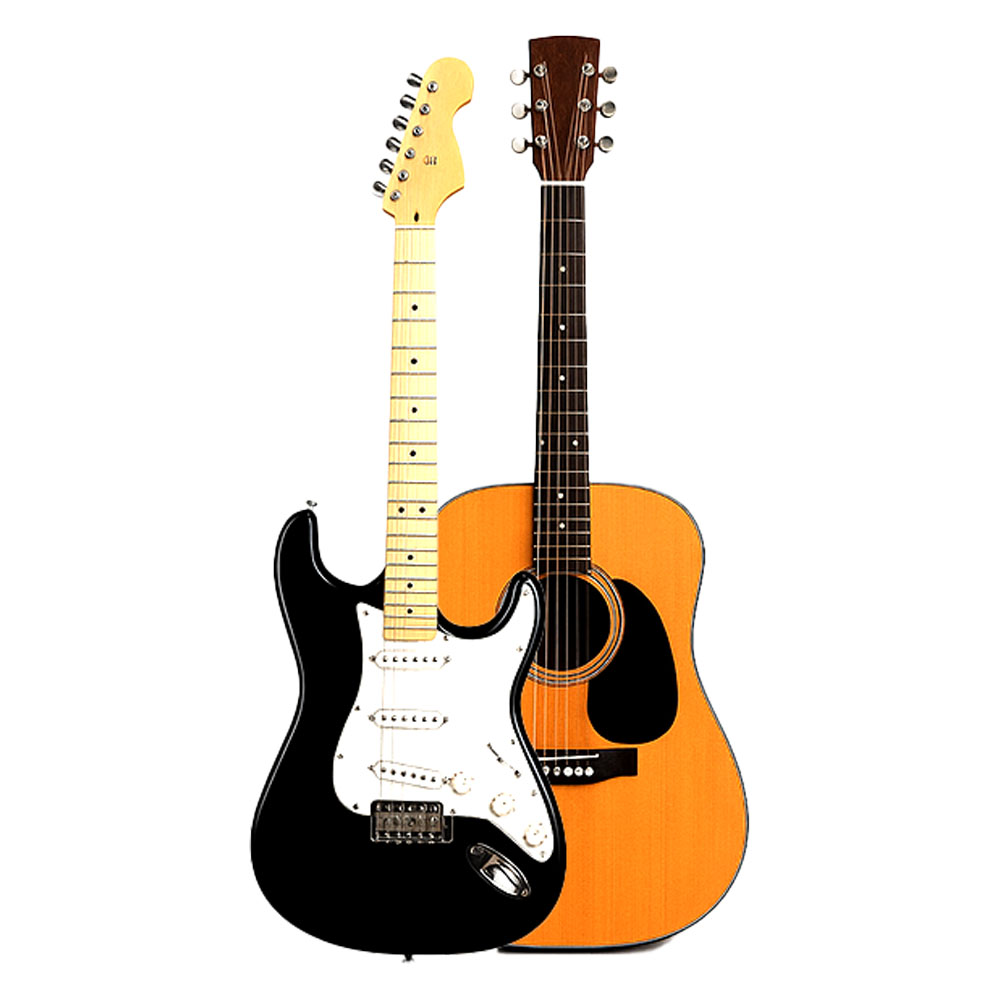
This is a truly distinctive and profoundly resonant guitar tuning, famously employed by the progressive metal band Tool in their seminal songs 'Parabol' and 'Parabola'. It represents a radical departure from standard tuning, crafting an expansive soundscape ideal for generating heavy, percussive riffs and intricate, often dissonant, harmonic textures. The defining characteristics of this tuning are the remarkably low pitches of the 6th, 5th, and most notably, the 2nd strings, with the latter dropping an entire octave below its standard pitch.
Technically, the open strings are tuned to B1-E2-D3-G3-B2-E4. When compared to the familiar E-A-D-G-B-e standard tuning, this arrangement sees the two lowest strings (6th and 5th) each lowered by a perfect fourth, resulting in a low B and E. The most dramatic alteration occurs on the 2nd string, which is pitched a full octave down from B3 to B2. Intriguingly, the 4th, 3rd, and 1st strings remain at their standard pitches of D3, G3, and E4, respectively.
The unique sequence of open strings B-E-D-G-B-E offers a complex harmonic palette. While it does not readily form a simple major or minor triad when strummed openly, it presents a host of compelling intervals. The lowest three strings (B1-E2-D3) establish a powerful, often dissonant, foundation that can create immense sonic weight. The upper register, comprising D3-G3-B2-E4, contains elements of a G major triad (G-B-D) if considering the D3, G3, and B2 (an octave lower B), with the E4 adding an extended tonality. This wide voicing and unusual string relationships facilitate rich, ambient chords, drones, and the signature thick sound synonymous with Tool's musical style.
Chords that become particularly accessible or take on novel voicings include robust low fifths (power chords) achievable across the 6th, 5th, and 4th strings. For instance, a simple two-finger shape at the same fret on the 6th and 5th strings will produce a perfect fifth, making heavy, chugging riffing remarkably fluid. The unusual, deep interval provided by the B2 on the 2nd string also unlocks possibilities for distinctive arpeggios, melodic lines, and chord voicings that are simply unachievable in standard tunings. The extremely low overall pitch mandates a careful selection of string gauges to ensure proper tension and intonation, especially for the dramatically down-tuned 2nd string.
How to Tune
When transitioning to Tool's Parabol/Parabola tuning from standard E Standard (E-A-D-G-B-e), it is crucial to proceed with caution and precision. Given the substantial drops on several strings, particularly the 2nd string, it is highly recommended to use heavier gauge strings than your standard set. This will help to maintain appropriate tension, prevent excessive floppiness, and ensure stable intonation. For any string movement exceeding 4 semitones (either up or down), a different string gauge is strongly advised for optimal playability and instrument health.
- 6th String (Low E): Tune down 5 semitones to B1. Due to this significant drop, a heavier gauge string for the 6th string is recommended to maintain adequate tension.
- 5th String (A): Tune down 5 semitones to E2. Similar to the 6th string, a heavier gauge string for the 5th string would be beneficial to prevent slackness.
- 4th String (D): Keep as is; no change (0 semitones). This string remains at its standard pitch of D3.
- 3rd String (G): Keep as is; no change (0 semitones). This string remains at its standard pitch of G3.
- 2nd String (B): Tune down 12 semitones to B2. This is an extreme drop of a full octave. To ensure this string is playable and maintains any reasonable tension, a much heavier gauge string is absolutely essential. Failure to do so will likely result in an unplayable, extremely slack string.
- 1st String (High E): Keep as is; no change (0 semitones). This string remains at its standard pitch of E4.
- 6th String (B1): This string is significantly tuned down from the standard E2, providing an exceptionally deep and resonant bass note that forms a powerful foundation for heavy riffs and open string drones.
- 5th String (E2): Also tuned down from the standard A2, this string offers another low drone. It sits a perfect fourth above the 6th string, facilitating powerful two-string power chords and thick, low-end harmonies.
- 4th String (D3): This string remains at its standard pitch, serving as a stable anchor and a familiar reference point amidst the more radical changes.
- 3rd String (G3): Maintained at its standard pitch, this string, alongside the 4th, forms a familiar core for many voicings and melodic structures.
- 2nd String (B2): This represents the most dramatic alteration, dropping a full octave from the standard B3. It introduces a unique, deep interval that fundamentally shapes the tuning's distinct character and sits surprisingly lower than the 3rd and 4th strings.
- 1st String (E4): This string remains at its standard pitch, preserving familiar melodic and harmonic possibilities at the highest end of the guitar's register in this tuning.
Loading an obscene
amount of Chords
Loading an obscene
amount of Scales
Loading Tuning Map
Loading Tuning Data
Comments - have your say on BEDGBE
Capos for BEDGBE
| Capo | Tuning | Name |
|---|---|---|
| 0 | BEDGBE | Tool Tuning |
Please use the below form to submit a song for BEDGBE that is not already on gtdb.org.
Videos for BEDGBE on









Tuning Map
- Fret
- S6
- S5
- S4
- S3
- S2
- S1
- -13
- D#
- G#
- C#
- F#
- A#
- D#
- -12
- E
- A
- D
- G
- B
- E
- -11
- F
- A#
- D#
- G#
- C
- F
- -10
- F#
- B
- E
- A
- C#
- F#
- -9
- G
- C
- F
- A#
- D
- G
- -8
- G#
- C#
- F#
- B
- D#
- G#
- -7
- A
- D
- G
- C
- E
- A
- -6
- A#
- D#
- G#
- C#
- F
- A#
- -5
- B
- E
- A
- D
- F#
- B
- -4
- C
- F
- A#
- D#
- G
- C
- -3
- C#
- F#
- B
- E
- G#
- C#
- -2
- D
- G
- C
- F
- A
- D
- -1
- D#
- G#
- C#
- F#
- A#
- D#
- 0
- E
- A
- D
- G
- B
- E
- 1
- F
- A#
- D#
- G#
- C
- F
- 2
- F#
- B
- E
- A
- C#
- F#
- 3
- G
- C
- F
- A#
- D
- G
- 4
- G#
- C#
- F#
- B
- D#
- G#
- 5
- A
- D
- G
- C
- E
- A
- 6
- A#
- D#
- G#
- C#
- F
- A#
- 7
- B
- E
- A
- D
- F#
- B
- -5
- -5
- 0
- 0
- -12
- 0
 © 2026 GTDB