DABDF#A Guitar Tuner
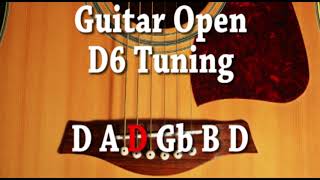
DABDF#A | DABDG♭A D6 - Guitar tuning, chords & scales
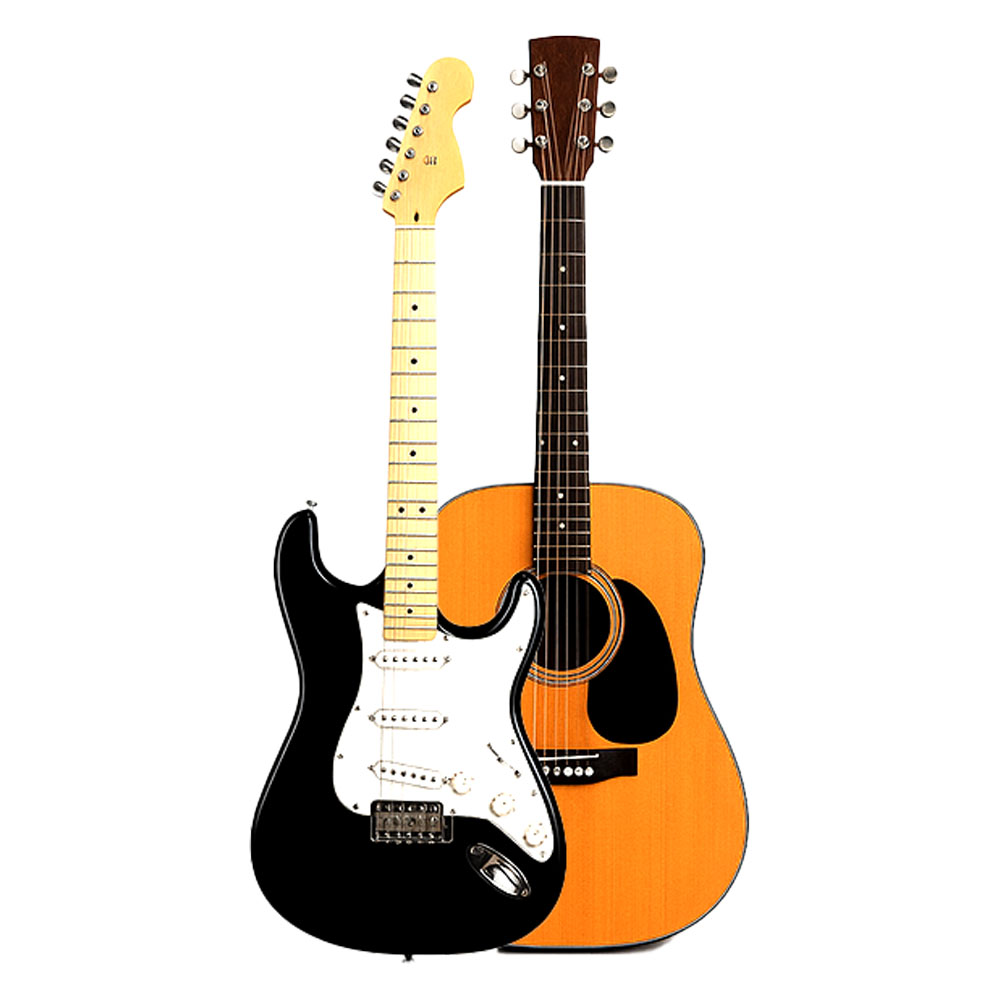
The 'd6' tuning for guitar is a rich and resonant open tuning, deeply rooted in the tradition of six-string C6 lap steel tunings but expertly transposed to a lower, fuller register. It's designed to provide a thick, harmonically complete sound, perfect for genres requiring a smooth, sustained chordal presence.
Technical Analysis
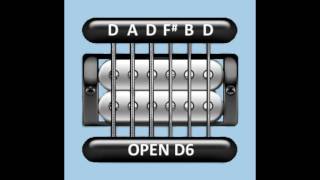
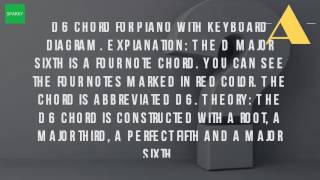
This tuning sets the guitar's open strings to D2-A2-B2-D3-F4#-A3 (low to high). When strummed open, these notes collectively form a D Major 6th chord (D6), comprising the root (D), perfect fifth (A), major sixth (B), octave (D), major third (F#), and another perfect fifth (A). The open strings essentially lay out a full D6 chord, making it incredibly easy to play this chord and its inversions across the fretboard with just one finger or a bar. The lower register, starting with D2, provides a powerful and fundamental bass response, while the inclusion of the F#4 at a higher octave adds brightness and sparkle, creating a balanced and expansive sonic palette.
Verbal Analysis & Playability
The 'd6' tuning offers immediate access to a warm, full-bodied sound that is highly evocative and versatile. Its inherent D6 chord makes it ideal for blues, country, Hawaiian, and jazz music, where a rich, extended chord quality is often desired. Sliding a bar across the frets effortlessly produces various X6 chords (e.g., barring at the 5th fret yields a G6 chord). This tuning also lends itself beautifully to melodic playing, allowing for clear single-note lines with a strong harmonic underpinning. The close proximity of the D, A, and B notes in the lower strings creates opportunities for interesting drone effects and fluid chord transitions, reminiscent of lap steel or pedal steel guitar sounds. Players will find this tuning inspiring for open-string arpeggios, expressive slides, and achieving a deep, resonant tone with minimal effort.
How to Tune
To achieve the 'd6' tuning from standard EADGBe, follow these steps carefully:
- String 6 (Low E): From a standard E2, tune down 2 semitones to D2.
- String 5 (A): From a standard A2, keep as is; no change (0 semitones).
- String 4 (D): From a standard D3, tune down 3 semitones to B2.
- String 3 (G): From a standard G3, tune down 5 semitones to D3. (Caution: Tuning down 5 semitones is a significant drop. Consider a heavier gauge string if you plan to use this tuning frequently or for extended periods.)
- String 2 (B): From a standard B3, tune down 5 semitones. (Caution: Tuning down 5 semitones is a significant drop. Consider a heavier gauge string if you plan to use this tuning frequently or for extended periods.)
- String 1 (High E): From a standard E4, tune down 7 semitones to A3. (Caution: Tuning down 7 semitones is a very significant drop. A heavier gauge string is strongly advised for stability and playability.)
Always tune slowly and carefully to prevent string breakage or neck damage, especially with large semitone changes.
String 6: D2
String 5: A2
String 4: B2
String 3: D3
String 2: F4#
String 1: A3
Loading an obscene
amount of Chords
Loading an obscene
amount of Scales
Loading Tuning Map
Loading Tuning Data
Comments - have your say on DABDF#A
Capos for DABDF#A
| Capo | Tuning | Name |
|---|---|---|
| 0 | DABDF#A | D6 |
Please use the below form to submit a song for DABDF#A that is not already on gtdb.org.
Videos for DABDF#A on












Tuning Map
- Fret
- S6
- S5
- S4
- S3
- S2
- S1
- -13
- D#
- G#
- C#
- F#
- A#
- D#
- -12
- E
- A
- D
- G
- B
- E
- -11
- F
- A#
- D#
- G#
- C
- F
- -10
- F#
- B
- E
- A
- C#
- F#
- -9
- G
- C
- F
- A#
- D
- G
- -8
- G#
- C#
- F#
- B
- D#
- G#
- -7
- A
- D
- G
- C
- E
- A
- -6
- A#
- D#
- G#
- C#
- F
- A#
- -5
- B
- E
- A
- D
- F#
- B
- -4
- C
- F
- A#
- D#
- G
- C
- -3
- C#
- F#
- B
- E
- G#
- C#
- -2
- D
- G
- C
- F
- A
- D
- -1
- D#
- G#
- C#
- F#
- A#
- D#
- 0
- E
- A
- D
- G
- B
- E
- 1
- F
- A#
- D#
- G#
- C
- F
- 2
- F#
- B
- E
- A
- C#
- F#
- 3
- G
- C
- F
- A#
- D
- G
- 4
- G#
- C#
- F#
- B
- D#
- G#
- 5
- A
- D
- G
- C
- E
- A
- 6
- A#
- D#
- G#
- C#
- F
- A#
- 7
- B
- E
- A
- D
- F#
- B
- -2
- 0
- -3
- -5
- -5
- -7
 © 2026 GTDB