DGCFADG Lute Tuner
DGCFADG 7 String Renaissance Lute - Lute tuning, chords & scales
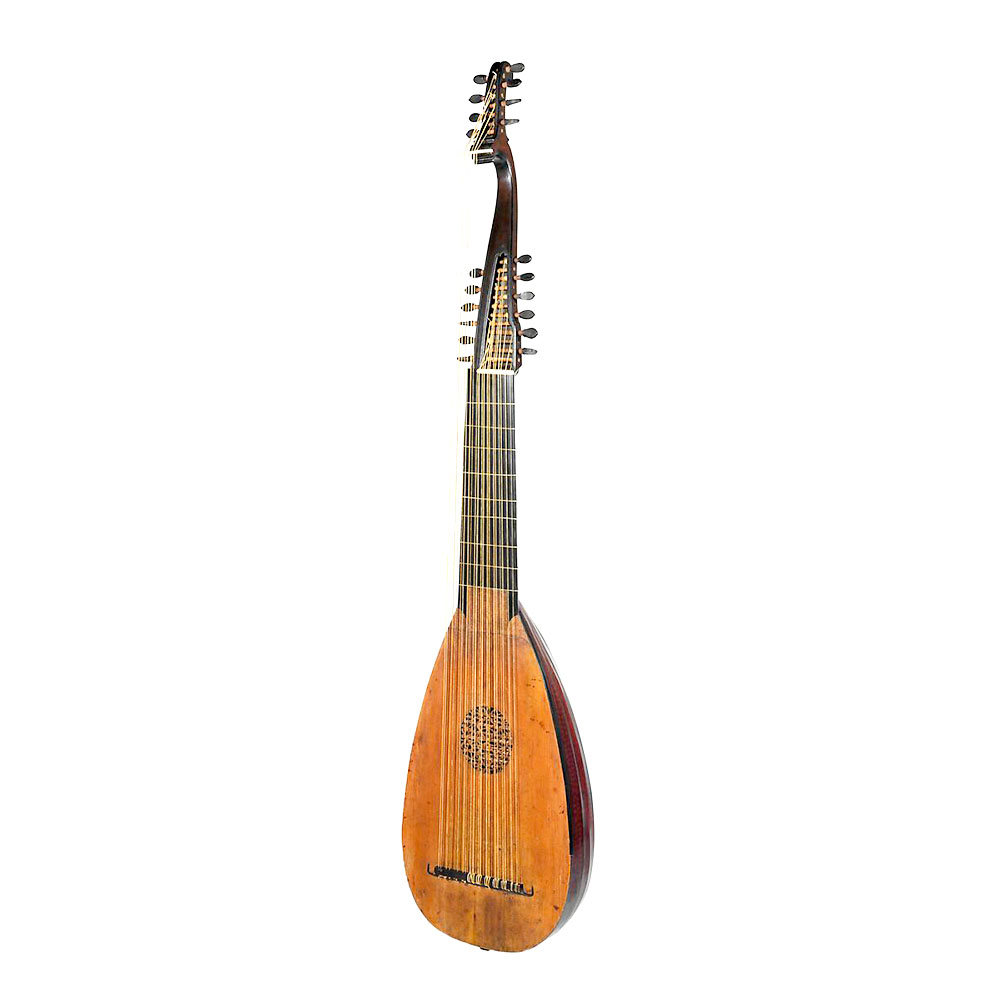
This is a classic 7-course tuning for the Renaissance Lute, famously employed by masters such as John Dowland. It embodies the rich, often melancholic, and polyphonic sound characteristic of the Renaissance period. Designed for complex melodic lines and intricate counterpoint, this tuning provides a resonant foundation that is both historically accurate and musically inspiring.
Technical Analysis
The tuning follows a largely consistent pattern of perfect fourths (P4), with a crucial major third (M3) interval that defines much of its character:
- String 7 (D2) to String 6 (G2): Perfect Fourth (5 semitones)
- String 6 (G2) to String 5 (C3): Perfect Fourth (5 semitones)
- String 5 (C3) to String 4 (F3): Perfect Fourth (5 semitones)
- String 4 (F3) to String 3 (A3): Major Third (4 semitones)
- String 3 (A3) to String 2 (D4): Perfect Fourth (5 semitones)
- String 2 (D4) to String 1 (G4): Perfect Fourth (5 semitones)
This sequence (P4-P4-P4-M3-P4-P4) allows for very natural voicings of common Renaissance harmonies. The open strings themselves – D, G, C, F, A, D, G – create a lush, open tonality. The F-A-D of strings 4-3-2 clearly outlines a D minor triad, while the overall collection of notes strongly suggests a D minor or G major harmonic landscape, providing a deep, resonant base for counterpoint and chordal playing.
Open Chords and Voicings
The open tuning itself presents a rich harmonic cluster:
- The lowest three strings (D-G-C) form the basis of a C major chord in 2nd inversion or a Gsus4 chord.
- The F-A-D on strings 4, 3, and 2 forms a clear D minor triad (D minor in 2nd inversion), a central harmony for much Renaissance lute music.
- Combined, the open strings (D-G-C-F-A-D-G) offer a complex voicing that can serve as a D minor 7 (D-F-A-C) or G major 7 sus4 (G-C-D-F) or C major 9 sus4 (C-F-G-A-D), providing significant harmonic depth without fretting.
Due to the consistent fourths and the strategic major third, common chord shapes become very accessible across the neck, facilitating both arpeggiated figures and chordal strumming typical of lute repertoire. The resonance of the open strings makes this an ideal tuning for pieces that utilize drones or open harmonies.
How to Tune
To achieve the Renaissance Lute Standard tuning, carefully adjust each string according to the following instructions. Please note that tuning up by 3 or 4 semitones requires caution to prevent string breakage, especially if using a standard gauge string not designed for higher tension.
- 7th String (Lowest): Tune your 7th string to D2, tuning it up by 3 semitones.
- 6th String: Tune your 6th string to G2, tuning it up by 3 semitones.
- 5th String: Tune your 5th string to C3, tuning it up by 3 semitones.
- 4th String: Tune your 4th string to F3, tuning it up by 3 semitones.
- 3rd String: Tune your 3rd string to A3, tuning it up by 2 semitones.
- 2nd String: Tune your 2nd string to D4, tuning it up by 3 semitones.
- 1st String (Highest): Tune your 1st string to G4, tuning it up by 3 semitones.
String 7: D2
String 6: G2
String 5: C3
String 4: F3
String 3: A3
String 2: D4
String 1: G4
Loading an obscene
amount of Chords
Loading an obscene
amount of Scales
Loading Tuning Map
Loading Tuning Data
Comments - have your say on DGCFADG
Capos for DGCFADG
| Capo | Tuning | Name |
|---|---|---|
| -12 | DGCFADG | Octave Down D Standard |
| -10 | EADGBEA | Extended Guitar Range 7 String Extra More |
| -6 | G#C#F#BD#G#C# | 7 String Standard G# |
| -5 | ADGCEAD | 7 Strings Standard A |
| -4 | A#D#G#C#FA#D# | Half-Step Flat F# |
| -3 | BEADF#BE | Extended Baritone Standard |
| -2 | CFA#D#GCF | Open D#6add9 |
| 0 | DGCFADG | 7 String Renaissance Lute |
| 2 | EADGBEA | Standard Tuning (Descant) |
Songs tuned to DGCFADG
Know a song in DGCFADG?
Please use the below form to submit a song for DGCFADG that is not already on gtdb.org.
Videos for DGCFADG on














Tuning Map
- Fret
- S7
- S6
- S5
- S4
- S3
- S2
- S1
- -13
- A#
- D#
- G#
- C#
- F#
- A#
- D#
- -12
- B
- E
- A
- D
- G
- B
- E
- -11
- C
- F
- A#
- D#
- G#
- C
- F
- -10
- C#
- F#
- B
- E
- A
- C#
- F#
- -9
- D
- G
- C
- F
- A#
- D
- G
- -8
- D#
- G#
- C#
- F#
- B
- D#
- G#
- -7
- E
- A
- D
- G
- C
- E
- A
- -6
- F
- A#
- D#
- G#
- C#
- F
- A#
- -5
- F#
- B
- E
- A
- D
- F#
- B
- -4
- G
- C
- F
- A#
- D#
- G
- C
- -3
- G#
- C#
- F#
- B
- E
- G#
- C#
- -2
- A
- D
- G
- C
- F
- A
- D
- -1
- A#
- D#
- G#
- C#
- F#
- A#
- D#
- 0
- B
- E
- A
- D
- G
- B
- E
- 1
- C
- F
- A#
- D#
- G#
- C
- F
- 2
- C#
- F#
- B
- E
- A
- C#
- F#
- 3
- D
- G
- C
- F
- A#
- D
- G
- 4
- D#
- G#
- C#
- F#
- B
- D#
- G#
- 5
- E
- A
- D
- G
- C
- E
- A
- 6
- F
- A#
- D#
- G#
- C#
- F
- A#
- 7
- F#
- B
- E
- A
- D
- F#
- B
- 3
- 3
- 3
- 3
- 2
- 3
- 3
 © 2026 GTDB