F#BEADG Bass Electric Tuner
F#BEADG | G♭BEADG Standard Tuning - Bass Electric tuning, chords & scales
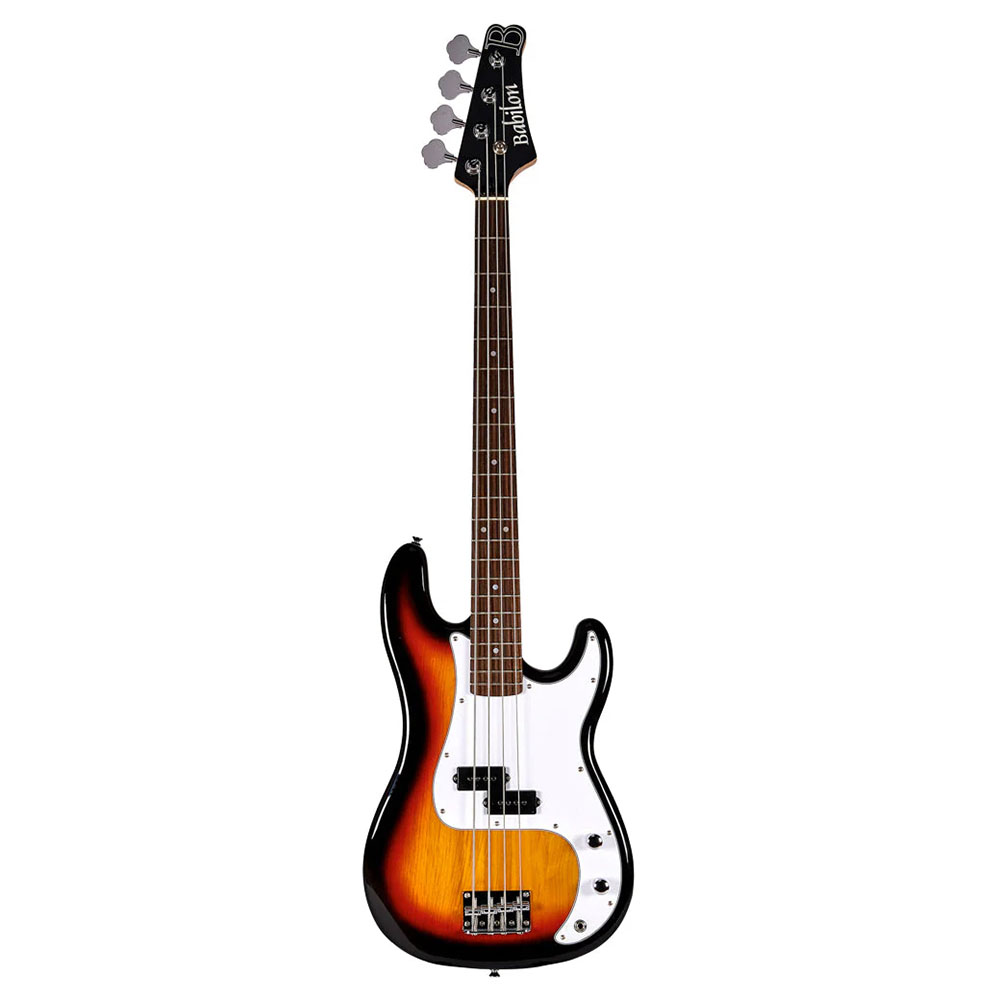
This tuning, referred to as "Standard Tuning" for a 6-string Electric Bass, provides a deep and expansive sonic palette. It extends the traditional 4-string bass range (E-A-D-G) by adding a low B string and an even lower F# string, creating an F#1-B0-E1-A1-D2-G2 configuration. This setup offers immense versatility, allowing bassists to navigate extremely low registers while maintaining the familiar perfect fourths interval across all strings.
Verbal Analysis
Verbally, this tuning is a powerhouse for modern bass playing. The addition of the F#1 string plunges the instrument into sub-bass territory, making it ideal for genres like metal, progressive rock, jazz fusion, or any style requiring a robust and resonant low end. The consistent perfect fourths tuning (F# to B, B to E, E to A, A to D, D to G) means that scale shapes, arpeggios, and chord voicings are highly intuitive and transferable across the fretboard. This consistency greatly aids in improvisation and composition, as patterns learned on one set of strings can be easily moved. The open F# provides a strong foundation for pedal tones, drones, or extremely low roots for chord progressions.
Technical Analysis
Technically, the "Standard Tuning" for this 6-string Bass Electric is structured as follows, from the lowest string (6th) to the highest (1st):
- 6th String: F#1 (F-sharp in the first octave)
- 5th String: B0 (B in the sub-contra octave)
- 4th String: E1 (E in the first octave)
- 3rd String: A1 (A in the first octave)
- 2nd String: D2 (D in the second octave)
- 1st String: G2 (G in the second octave)
The intervallic relationships are all Perfect Fourths (P4), creating a linear and predictable fretboard layout. This is standard practice for bass guitars and forms a logical progression of notes.
Open Chords and Voicings
While open chords are less frequently emphasized on bass than guitar, the open strings themselves can form interesting harmonic backdrops. For instance, the lowest three strings (F#1-B0-E1) form a sparse F# minor 11th chord without the third, or a suspended voicing. The open B0-E1-A1-D2-G2 provides a strong foundation for modal playing, particularly in E minor or B Phrygian contexts, or as a set of drone strings. Due to the perfect fourths tuning, common power chord shapes (root and 5th) are easily accessible across any two adjacent strings by simply fretting the root on the lower string and the fifth on the string above at the same fret. Triads and more complex voicings can be built across three or four strings using familiar shapes that slide chromatically, such as a root on the 6th string, a perfect 4th on the 5th string (same fret), and a perfect 7th on the 4th string (two frets higher than the 6th string). The low F# allows for particularly powerful root notes in keys like F# minor, B minor, E minor, or as a dominant for C# minor.
Here are the specific notes for each string of your 6-string Electric Bass in this "Standard Tuning":
- 6th String (Lowest): F#1
- 5th String: B0
- 4th String: E1
- 3rd String: A1
- 2nd String: D2
- 1st String (Highest): G2
How to Tune Your Bass
To achieve this "Standard Tuning" for your 6-string Electric Bass, you will need to adjust each string significantly downwards from a hypothetical higher reference point. Given the substantial change, it is highly recommended to use a different gauge string set specifically designed for lower tunings or a 6-string bass, as tuning down 12 semitones on standard gauge strings can result in very loose tension and potential damage if tuned back up without care.
- 6th String (F#1): Tune down 12 semitones. This is a full octave down, so a heavier gauge string is strongly advised to maintain proper tension.
- 5th String (B0): Tune down 12 semitones. This is a full octave down, so a heavier gauge string is strongly advised to maintain proper tension.
- 4th String (E1): Tune down 12 semitones. This is a full octave down, so a heavier gauge string is strongly advised to maintain proper tension.
- 3rd String (A1): Tune down 12 semitones. This is a full octave down, so a heavier gauge string is strongly advised to maintain proper tension.
- 2nd String (D2): Tune down 12 semitones. This is a full octave down, so a heavier gauge string is strongly advised to maintain proper tension.
- 1st String (G2): Tune down 12 semitones. This is a full octave down, so a heavier gauge string is strongly advised to maintain proper tension.
Always use a reliable tuner and check your intonation after making significant tuning changes.
Loading an obscene
amount of Chords
Loading an obscene
amount of Scales
Loading Tuning Map
Loading Tuning Data
Comments - have your say on F#BEADG
Capos for F#BEADG
| Capo | Tuning | Name |
|---|---|---|
| -1 | F#A#D#G#C#F# | F# Standard + A# Standard |
| 0 | F#BEADG | Standard Tuning |
| 12 | F#BEADG | F#BEADG |
Please use the below form to submit a song for F#BEADG that is not already on gtdb.org.
Videos for F#BEADG on














Tuning Map
- Fret
- S8
- S7
- S6
- S5
- S4
- S3
- -13
- F
- A#
- D#
- G#
- C#
- F#
- -12
- F#
- B
- E
- A
- D
- G
- -11
- G
- C
- F
- A#
- D#
- G#
- -10
- G#
- C#
- F#
- B
- E
- A
- -9
- A
- D
- G
- C
- F
- A#
- -8
- A#
- D#
- G#
- C#
- F#
- B
- -7
- B
- E
- A
- D
- G
- C
- -6
- C
- F
- A#
- D#
- G#
- C#
- -5
- C#
- F#
- B
- E
- A
- D
- -4
- D
- G
- C
- F
- A#
- D#
- -3
- D#
- G#
- C#
- F#
- B
- E
- -2
- E
- A
- D
- G
- C
- F
- -1
- F
- A#
- D#
- G#
- C#
- F#
- 0
- F#
- B
- E
- A
- D
- G
- 1
- G
- C
- F
- A#
- D#
- G#
- 2
- G#
- C#
- F#
- B
- E
- A
- 3
- A
- D
- G
- C
- F
- A#
- 4
- A#
- D#
- G#
- C#
- F#
- B
- 5
- B
- E
- A
- D
- G
- C
- 6
- C
- F
- A#
- D#
- G#
- C#
- 7
- C#
- F#
- B
- E
- A
- D
- -12
- -12
- -12
- -12
- -12
- -12
 © 2026 GTDB