F#C#G#D# Ukulele Tuner
F#C#G#D# | G♭D♭A♭E♭ Flat Tenor - Ukulele tuning, chords & scales
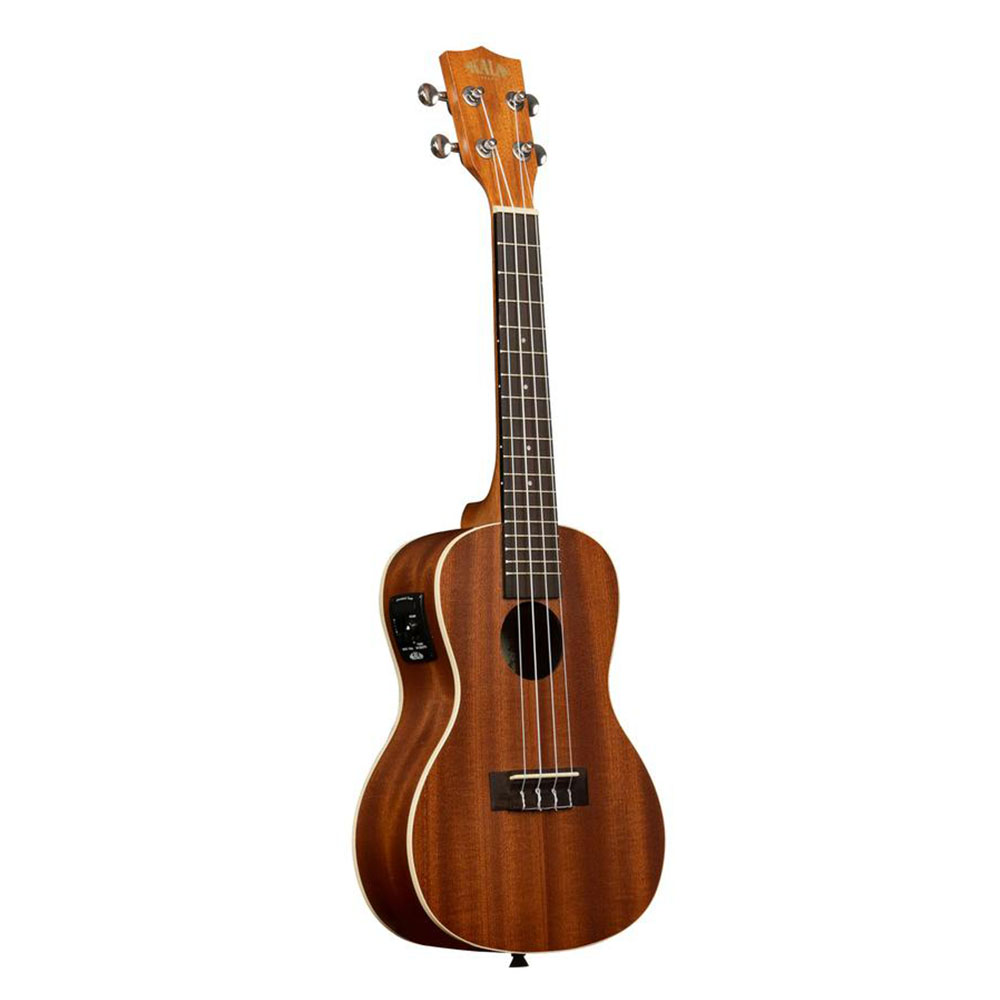
The F# Chordsmith Tuning for Ukulele is a truly distinctive and harmonically rich setup, moving away from conventional tunings to offer a fresh sonic palette. Designed for a captivating and full sound, this tuning leverages a sequence of perfect fifths across all strings, creating a powerful and resonant open chord.
Technical Analysis:
- Instrument: 4-string Tenor Ukulele
- Open Notes (Lowest to Highest): F#3, C#4, G#4, D#5
- Interval Structure: This tuning is built entirely on perfect fifths. Each adjacent pair of strings is tuned a perfect fifth apart (7 semitones).
- String 4 (F#3) to String 3 (C#4): Perfect 5th
- String 3 (C#4) to String 2 (G#4): Perfect 5th
- String 2 (G#4) to String 1 (D#5): Perfect 5th
Verbal Analysis & Chords:
This "Perfect Fifths" tuning delivers an incredibly open and majestic sound. The F#3-C#4-G#4-D#5 sequence on open strings doesn't form a simple major or minor triad, but rather a rich, extended chord that can be interpreted as an F#add2(6) or F#add9(6). The consistent intervals make it exceptionally versatile for creating powerful, ringing chords and melodic lines.
Chord shapes will feel intuitive and symmetrical across the fretboard, allowing for easy access to extended harmonies and unique voicings. It's particularly well-suited for:
- Power Chords: The strong fifths make this tuning excellent for robust power chords and rock-inspired ukulele rhythms.
- Drones and Open Voicings: The open strings provide a harmonically dense drone, perfect for fingerstyle and chord melody playing, adding depth and resonance.
- Symmetrical Shapes: Moving a single finger or barring across the fretboard will yield consistent, harmonically related chords, simplifying exploration and fostering creative melodic ideas.
How to Tune:
To achieve the F# Chordsmith Tuning, you will need to adjust your ukulele strings as follows. Please exercise caution when tuning strings up, especially for larger semitone movements, as this increases string tension significantly.
- 4th String (Lowest): Tune up 2 semitones to F#3.
- 3rd String: Tune up 4 semitones to C#4. (Note: Tuning up 4 semitones can significantly increase tension; consider using a different string gauge if this is a permanent tuning or if your strings feel too tight.)
- 2nd String: Tune up 6 semitones to G#4. (Warning: Tuning up 6 semitones is a substantial change; it is strongly advised to use a heavier gauge string set designed for higher tension to prevent string breakage and neck damage.)
- 1st String (Highest): Tune up 4 semitones to D#5. (Note: Tuning up 4 semitones can significantly increase tension; consider using a different string gauge if this is a permanent tuning or if your strings feel too tight.)
Always tune slowly and check your instrument's neck relief to ensure it can handle the increased tension safely. If unsure, consult a professional luthier.
4th String: F#3 (Lowest String)
3rd String: C#4
2nd String: G#4
1st String: D#5 (Highest String)
Loading an obscene
amount of Chords
Loading an obscene
amount of Scales
Loading Tuning Map
Loading Tuning Data
Comments - have your say on F#C#G#D#
Capos for F#C#G#D#
| Capo | Tuning | Name |
|---|---|---|
| 0 | F#C#G#D# | Flat Tenor |
Please use the below form to submit a song for F#C#G#D# that is not already on gtdb.org.
Videos for F#C#G#D# on













 © 2026 GTDB