GGCCA#A# Guitar Tuner
GGCCA#A# | GGCCB♭B♭ Bad Moon Rising - Guitar tuning, chords & scales
Description - Bad Moon Rising
This tuning was used by thurston moore on the songs ghost bitch and i love her all the time from their 1985 album 'bad moon rising' although this tuning was always used with a drumstick under the 12th fret and was abandoned for f#f#f#f#eb in live renditions shortly after the release of the album. still sounds cool though.
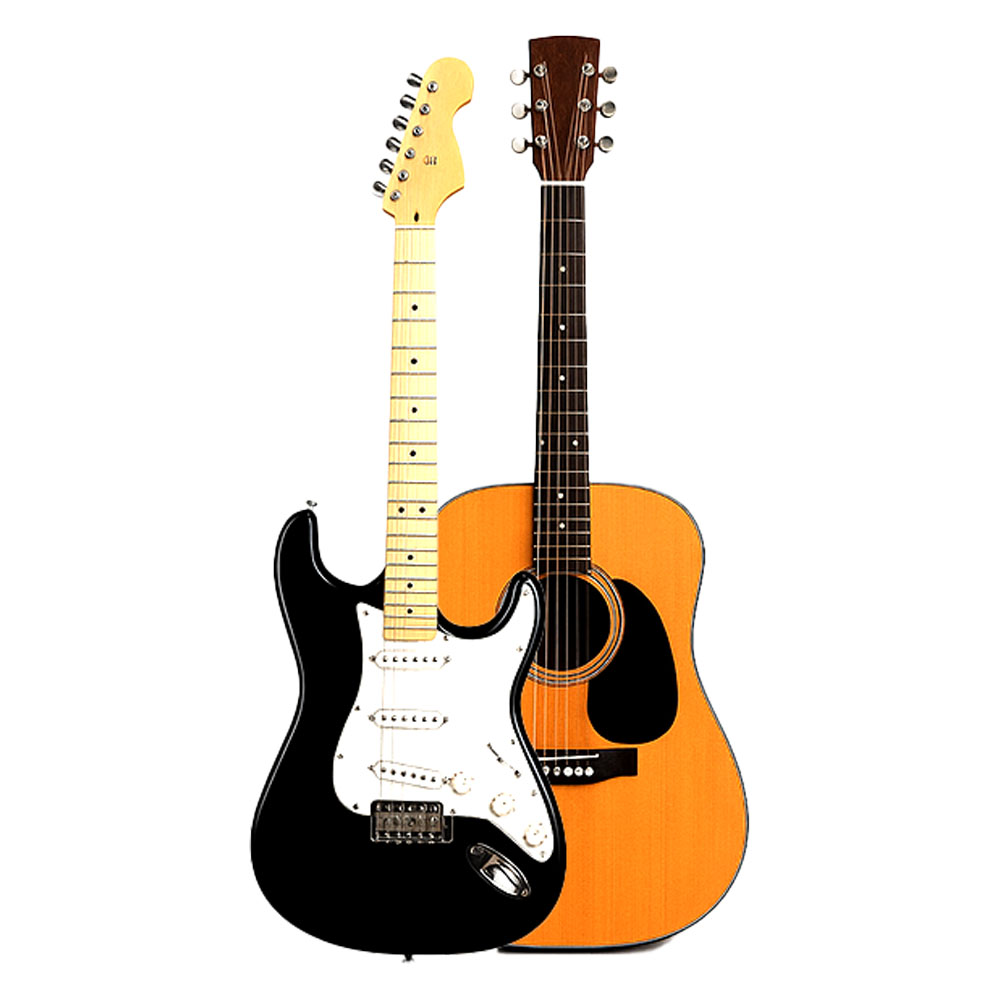
The "Bad Moon Rising" tuning, famously employed by Thurston Moore on the iconic Sonic Youth album of the same name, is a highly experimental and textural approach to guitar. This tuning (G2 G2 C3 C3 A4# A4#) is not designed for conventional chord progressions but rather for creating dense, drone-like soundscapes and dissonant, shimmering textures.
Verbal Analysis
This is a tuning steeped in the experimental ethos of Sonic Youth. It generates a sound that is both massive and piercing, with a deeply resonant low end and unusually bright, high-pitched top strings. The doubled G's and C's create a thick, almost orchestral foundation, while the doubled A4#s provide a cutting, almost alarm-like chime. The original usage of this tuning involved placing a drumstick under the 12th fret, which effectively raises the sounding pitch of all "open" strings by an entire octave (to G3 G3 C4 C4 A5# A5#). This transforms the tuning into an even more extreme, clangorous, and bell-like sound, ideal for the abrasive and hypnotic noise-rock of tracks like "Ghost Bitch" and "I Love Her All The Time." It's a tuning that evokes tension, atmosphere, and a sense of raw, untamed sonic exploration.
Technical Analysis
The open notes of this tuning are G2, G2, C3, C3, A4#, A4#.
- The two lowest strings are tuned to a unison G2, providing a massive, fundamental drone.
- The middle two strings are tuned to a unison C3, a perfect fourth above the Gs. This creates a strong, resonant interval of a G power chord without a third, or the root and fifth of a C chord.
- The two highest strings are tuned to a unison A4#. This is an exceptionally high register for a guitar's open string (especially string 2), creating a piercing, almost synth-like quality.
The core open notes (G, C, A#) are not a conventional triad, but rather form a dissonant cluster. If we consider A# as Bb, the combination G-C-Bb could be interpreted as part of a G minor 7 chord (missing the D and F), or a C dominant 7 suspended 4 (C-F-G-Bb) also missing the F. However, the exact octave placement (A4#) for the top strings creates a wide and dramatic leap, especially from the C3 on string 3 to the A4# on string 2 (a compound augmented 6th or a Major 6th plus an octave). This spread of notes across octaves avoids simple chordal interpretations and emphasizes complex overtones and sympathetic resonance.
Chords in this tuning are likely to be experimental. Barring across the lower strings (G2 G2 C3 C3) will produce a thick G-C drone. Simple two or three-finger shapes can create dissonant intervals or open power chords. For instance:
- Strumming all open strings: This will yield a dense, resonant sound based around G, C, and A# (or Bb). The large interval jump and high A4#s will make it quite "bright" and potentially unsettling, but also rich with overtones.
- Fretting all strings at the 5th fret would yield C3 C3 F3 F3 D5# D5# – a similarly dissonant but shifted voicing.
- Fretting the lower four strings at the 2nd fret would give A2 A2 D3 D3, a simple A power chord shape, but with the high A4#s still ringing out.
This tuning demands an exploratory approach, focusing on drone, texture, and the interplay of sympathetic vibrations rather than traditional harmonic movement. It's a prime example of how alternative tunings can unlock entirely new sonic vocabularies.
How to Tune to Bad Moon Rising
To achieve the "Bad Moon Rising" tuning, adjust your guitar from standard EADGBe as follows. Please note that significant tension changes are involved for some strings, and caution is advised. For movements exceeding 4 semitones up or down, a different string gauge might be recommended for optimal playability and string longevity.
- String 6 (Low E): Tune up 3 semitones to G2. (Care is advised when tuning up multiple semitones.)
- String 5 (A): Tune down 2 semitones to G2.
- String 4 (D): Tune down 2 semitones to C3.
- String 3 (G): Tune down 7 semitones to C3. (This is a large drop; consider string tension carefully.)
- String 2 (B): Tune down 1 semitone to A#3.
- String 1 (High E): Tune down 6 semitones to A#3. (This is a significant drop; a heavier gauge string for this pitch might be beneficial.)
Note on Octaves: The provided tuning data includes target notes for the 1st and 2nd strings as A4#. However, the tuning instructions (based on standard EADGBe and the specified semitone movements) will result in A#3 for both these strings. The verbal and technical analysis in the description section considers the A4# specified in the original tuning notes for its unique sonic implications, while the 'How to Tune' section strictly adheres to the provided string movement instructions, which lead to A#3. Achieving A4# from standard tuning would require significantly different and more extreme string tension adjustments.
Loading an obscene
amount of Chords
Loading an obscene
amount of Scales
Loading Tuning Map
Loading Tuning Data
Comments - have your say on GGCCA#A#
Capos for GGCCA#A#
| Capo | Tuning | Name |
|---|---|---|
| 0 | GGCCA#A# | Bad Moon Rising |
Please use the below form to submit a song for GGCCA#A# that is not already on gtdb.org.
Videos for GGCCA#A# on





![Bad Moon Rising - CCR [Acoustic Guitar Lesson Tutorial for Beginners]](https://i.ytimg.com/vi/FjUCL2ahoLo/mqdefault.jpg)











Tuning Map
- Fret
- S6
- S5
- S4
- S3
- S2
- S1
- -13
- D#
- G#
- C#
- F#
- A#
- D#
- -12
- E
- A
- D
- G
- B
- E
- -11
- F
- A#
- D#
- G#
- C
- F
- -10
- F#
- B
- E
- A
- C#
- F#
- -9
- G
- C
- F
- A#
- D
- G
- -8
- G#
- C#
- F#
- B
- D#
- G#
- -7
- A
- D
- G
- C
- E
- A
- -6
- A#
- D#
- G#
- C#
- F
- A#
- -5
- B
- E
- A
- D
- F#
- B
- -4
- C
- F
- A#
- D#
- G
- C
- -3
- C#
- F#
- B
- E
- G#
- C#
- -2
- D
- G
- C
- F
- A
- D
- -1
- D#
- G#
- C#
- F#
- A#
- D#
- 0
- E
- A
- D
- G
- B
- E
- 1
- F
- A#
- D#
- G#
- C
- F
- 2
- F#
- B
- E
- A
- C#
- F#
- 3
- G
- C
- F
- A#
- D
- G
- 4
- G#
- C#
- F#
- B
- D#
- G#
- 5
- A
- D
- G
- C
- E
- A
- 6
- A#
- D#
- G#
- C#
- F
- A#
- 7
- B
- E
- A
- D
- F#
- B
- 3
- -2
- -2
- -7
- -1
- -6
 © 2026 GTDB